
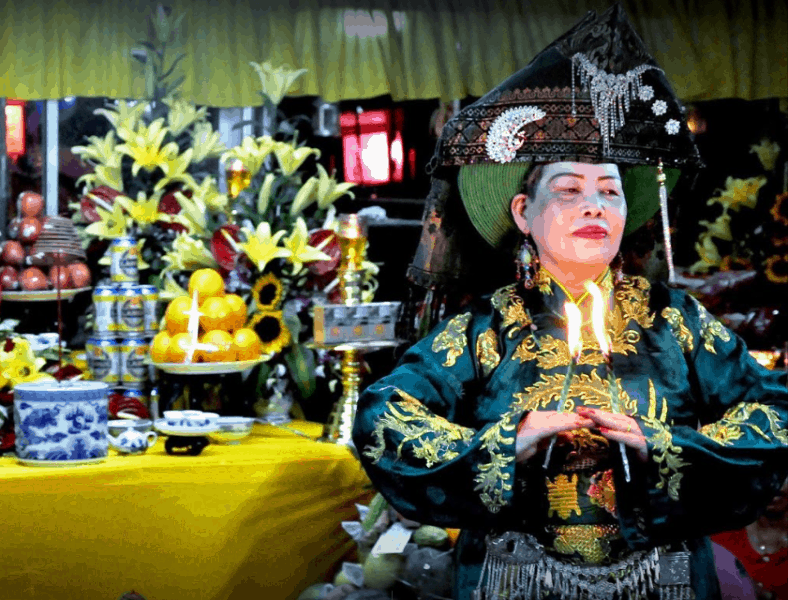
Hon Chen Temple Introduction
Hon Chen Temple, also known as Hue Nam Temple, is one of the most spiritually significant and culturally unique temples in Hue. Located on the scenic Ngoc Tran Mountain along the northern bank of the Perfume River, about 10 kilometers from Hue city center, the temple offers both a sacred atmosphere and poetic natural beauty. Surrounded by lush hills and overlooking the gentle river, it creates a harmonious feng shui setting deeply rooted in Eastern spiritual philosophy.
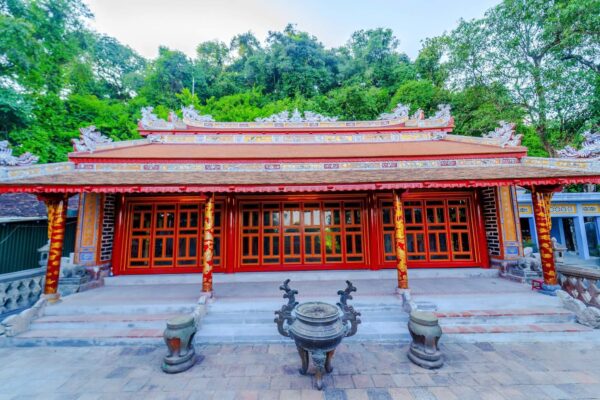
Originally built during the Cham period and later restored under the Nguyen Dynasty, Hon Chen Temple is dedicated to Thien Y A Na, the Holy Mother Goddess of the region. She is worshiped as a powerful and compassionate deity who protects and blesses the people. Unlike many purely Buddhist temples in Hue, Hon Chen Temple reflects a fascinating blend of Cham beliefs, folk religion, Taoism, and royal court rituals.
During and after your stay in Hue, you may be interested in our services, such as
- Hue to Hoi An by private car transfer– from 69 USD/ Sedan.
- Hue street food tour– from 34 USD/ pax.
- Hue to Phong Nha by private car– from 99 USD/ Sedan.
- Hue city private tour– from 57 USD/ pax.
- Hue to Ba Na Hills private car– from 95 USD/ Sedan.
How to get to Hon Chen Temple Hue?
The Hon Chen Temple is about 10 km Southwest of Hue City. From the heart of Hue city, you can reach Hon Chen in many ways. You can take a dragon boat on the Perfume River.
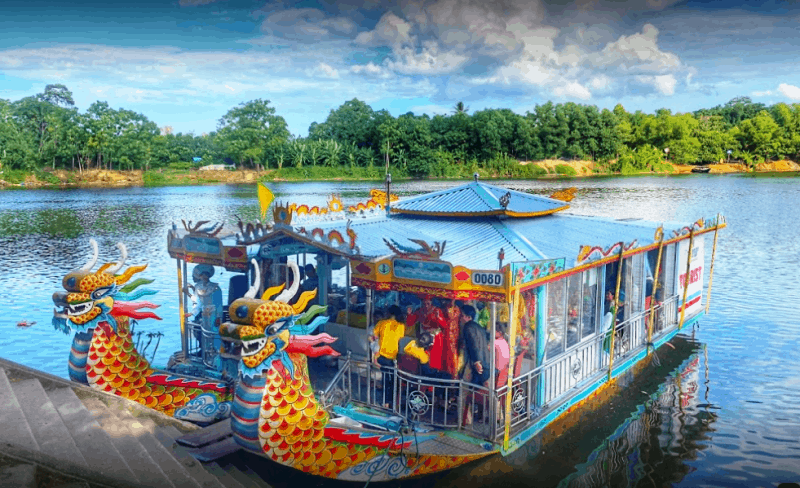
If you are traveling by road, you can follow these instructions: from Hue city center, you go straight in the direction of Bui Thi Xuan Street and then turn left onto Huyen Tran Princess Road. Then, you get to the Wharf, take a boat to go to the temple.
Moreover, from Thien Mu Pagoda, you can take the Van Thanh road, go straight ahead, then turn left onto Long Ho road, then continue straight onto Kim Long/Ngoc Ho road, so you can get to Hon Chen temple.
If not, you can book Hue Private Car via Culture Pham Travel, and we will make sure you have a great trip to Hon Chen Temple.
Among the relics of the Complex of Hue Monuments, perhaps Hon Chen Temple is associated with the most anecdotes. According to the legend, Hon Chen means “returned bowl of Jade”.
It is said that during a visit to the temple, Emperor Minh Mang accidentally dropped his precious jade bowl into the Perfume River. Believing it was lost forever, the emperor was filled with regret. Unexpectedly, a giant turtle rose from the water, carrying the bowl back to him. Amazed by this miraculous event, the emperor ordered the temple to be named “Hòn Chén” to commemorate the extraordinary return of the sacred object.
Later, during the reign of Emperor Dong Khanh, the temple was officially renamed “Huệ Nam Temple.” The new name carried the meaning of “spreading imperial grace to the South,” reflecting royal recognition and spiritual reverence. Over time, the temple became not only a sacred place of worship but also a site rich in mystical stories, royal patronage, and deep-rooted folk beliefs that continue to captivate visitors today.
What religions were worshiped at the temple?
Cham Spiritual Influence
Originally, the goddess Thiên Y A Na was derived from the Cham goddess Po Nagar, reflecting the cultural exchange between Cham and Vietnamese civilizations. This shows that Hon Chen Temple preserves elements of ancient Cham beliefs alongside Vietnamese traditions.
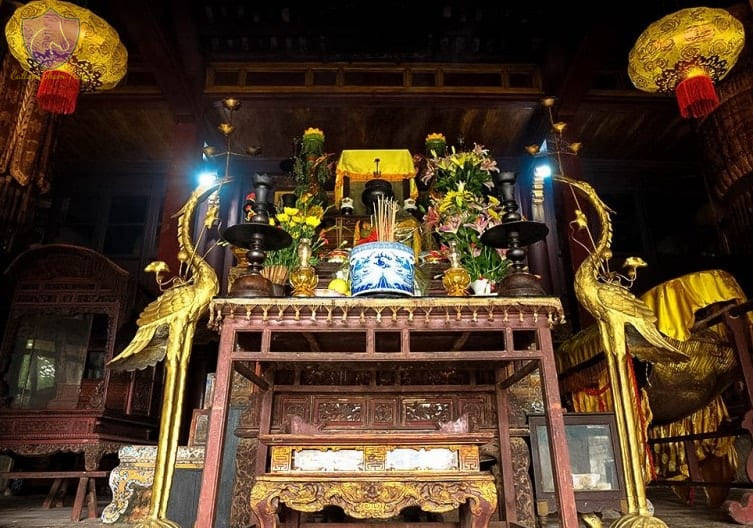
Folk Religion (Mother Goddess Worship – Đạo Mẫu)
The main belief practiced at Hon Chen Temple is Vietnamese folk religion, especially the worship of Thiên Y A Na, the Holy Mother Goddess of the region. She is considered a powerful and protective deity who blesses the land and its people. This form of worship is closely connected to Đạo Mẫu (Mother Goddess religion), a spiritual tradition deeply rooted in Vietnamese culture.
Confucian Influence
During the Nguyen Dynasty, especially under emperors like Minh Mang and Dong Khanh, the temple received royal recognition. As a result, Confucian ceremonial elements were incorporated into its rituals, emphasizing loyalty, morality, and imperial authority.
Taoist and Buddhist Elements
The temple’s rituals and decorative motifs also show traces of Taoism and Buddhism, particularly in spiritual symbolism, offerings, and ceremonial practices. However, it is not considered a purely Buddhist pagoda.
The Architecture at the Temple
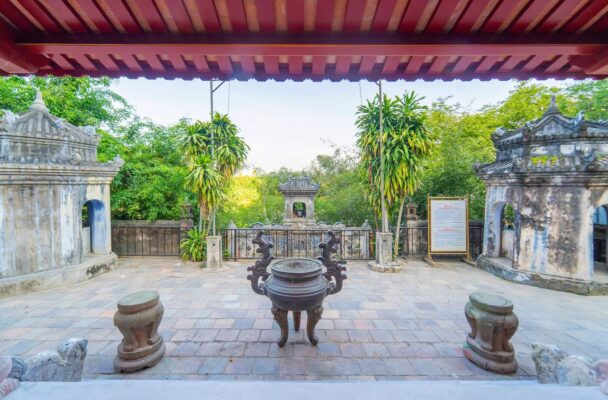
The Hon Chen Temple is a relic cluster of more than 10 architectural structures, located on the Ngoc Tran mountain by the Perfume River. The main architecture of the temple is Minh Kinh Dai shrine located in the center; On the right is the Mandarin’s residence, Trinh Cat, and the Holy Pagoda; On the left is the Ngu Hanh Palace, Tiger’s altar, and the holy guardian’s altar. Nearby the riverside is also the Thuy Phu shrine.
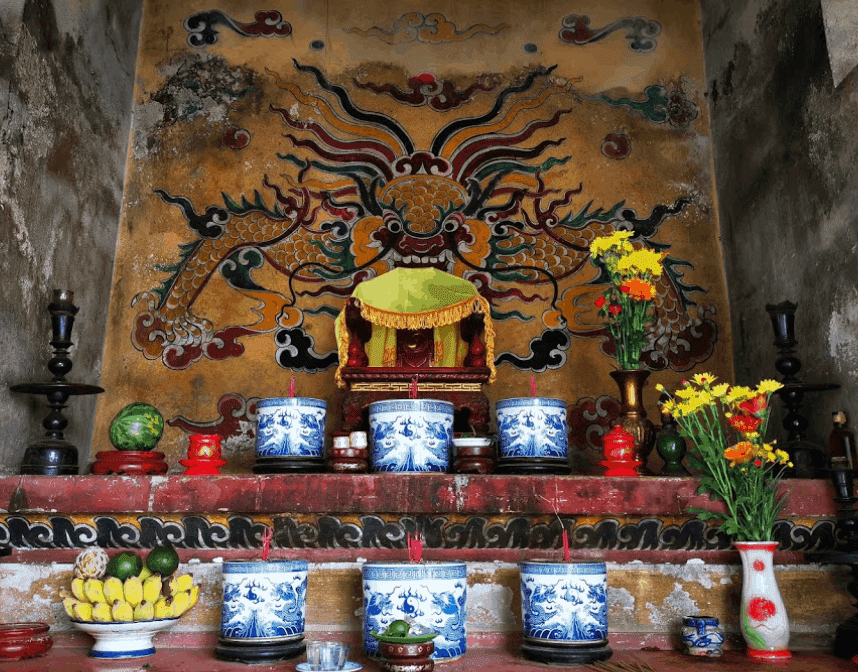
Minh Kinh Dai is the most important shrine and also the place where the Earth Mother festival takes place in March and July every year, following the lunar calendar. Minh Kinh Daiis is divided into 3 altar levels. The first level is the altar to worship the Thien Y A Na goddess, Van Huong princess, as well as the Dong Khanh emperor. The 2nd level is the altar to worship the powerful gods, as well as setting up the offerings. The last level is the space for people who come to worship and pray, and make wishes.
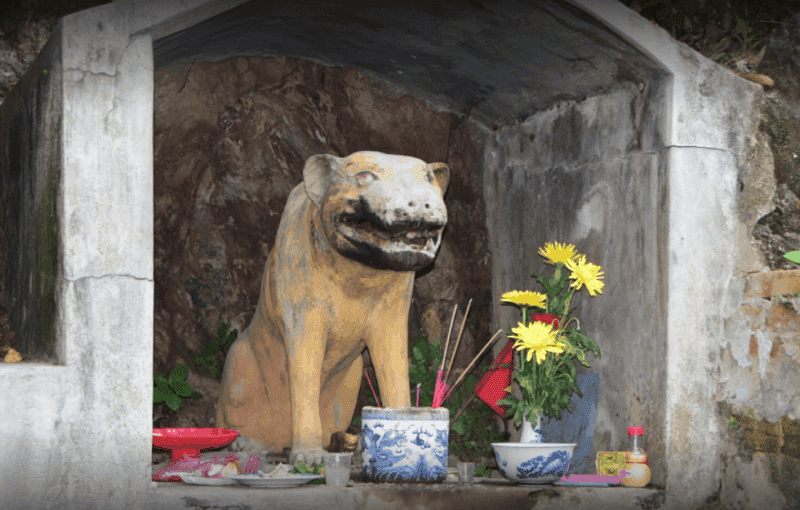
The Hue Nam Temple Hue has an important location in the spiritual life of the people of Hue, and it is also the only temple in Hue that combines the royal etiquette and folk beliefs; Between festivals and co-gloss; Between psychic culture and superstition. This is also where the fine arts decoration reached its peak in the late 19th century. The temple is also a mixture of many religious beliefs that bring diverse shades of religion.
Besides this beautiful temple, you can also visit some must-see attractions in Hue, such as Thien An Hills, Lap An Lagoon, Lang Co beach, Ngu Binh Mountain, etc.
Hon Chen Temple Festivals
The Hon Chen Temple Festival is one of the most distinctive spiritual and cultural events in Hue, held annually at Hon Chen Temple. This vibrant celebration honors Thiên Y A Na, the Holy Mother Goddess, and reflects the deep-rooted tradition of Vietnamese Mother Goddess worship (Đạo Mẫu) in Central Vietnam.
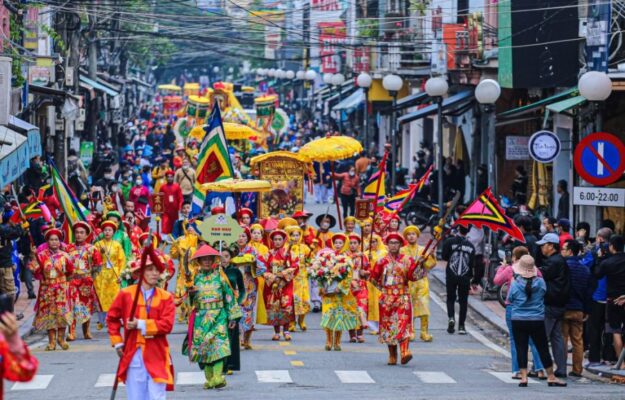
Time of the Festival
The festival takes place twice a year, in the third and seventh lunar months. The main celebration is usually held in the third lunar month, attracting thousands of pilgrims, local residents, and visitors from different regions.
Unique River Procession
One of the most remarkable features of the Hon Chen Festival is its colorful river procession on the Perfume River. Decorated dragon boats carry worshippers dressed in traditional costumes, accompanied by ritual music and ceremonial offerings. The procession creates a spectacular scene as boats glide along the poetic river toward the temple, blending spirituality with scenic beauty.
Rituals and Performances
The festival includes solemn religious ceremonies, traditional music (chầu văn), spirit invocation rituals, and folk performances. Participants pray for peace, prosperity, good health, and blessings for their families. The atmosphere is both sacred and lively, reflecting the spiritual devotion of the local community.
Cultural Significance
Unlike many royal or purely Buddhist festivals in Hue, the Hon Chen Festival represents a strong connection between folk beliefs and imperial recognition. Historically supported by the Nguyen Dynasty emperors, the temple became a place where royal rituals and local spiritual practices coexisted harmoniously.
Why It Is Special
What makes the Hon Chen Temple Festival truly special is its combination of river culture, folk spirituality, and royal heritage. The image of colorful boats, traditional music echoing across the water, and incense rising from the hillside temple creates an unforgettable cultural experience.
Attending the Hon Chen Festival offers visitors a rare opportunity to witness a living spiritual tradition that continues to shape Hue’s cultural identity today.
Useful Travel Tips for Visiting Hon Chen Temple
Planning will help you enjoy a smooth and meaningful visit to this unique riverside sanctuary. Below is important and practical information regarding entrance fees, opening hours, and dress code.
Hon Chen Temple Entrance Fee
The entrance fee to visit Hon Chen Temple in Hue is usually listed at around 50,000 VND per adult (roughly 2 USD), while children can enter free of charge. However, during the Hon Chen Temple Festival (held in the third and seventh lunar months), the site is often open to visitors free of charge. Please note that this ticket price does not include the cost of hiring a dragon boat to travel along the Perfume River.
If you choose to travel by dragon boat on the Perfume River, you will need to pay for the boat service separately. Boat prices vary depending on whether you join a group tour or hire a private boat.
Hue Nam Temple Opening Hours
Hon Chen Temple is generally open daily from early morning until late afternoon, approximately from 7:00 AM to 5:00 PM.
The best time to visit is in the morning or late afternoon, when the weather is cooler, and the light is softer for photography. During the Hon Chen Festival (third and seventh lunar months), the temple may be busier, and activities can last longer than usual.
Hue Nam Temple Dress Code
As Hue Nam Temple is an active spiritual and religious site, visitors should dress respectfully and modestly:
- Wear clothes that cover your shoulders and knees.
- Avoid short skirts, shorts, tank tops, or overly revealing outfits.
- Remove hats and sunglasses when entering the main worship areas.
- Speak softly and maintain a respectful attitude inside the temple.
- Comfortable shoes are recommended, as the temple complex is built along a hillside with steps and uneven paths.
🌿 Additional Advice
- Bring water, sunscreen, and a hat, especially during the hot months from May to August.
- If arriving by boat, confirm the return time with the boat operator.
- Combine your visit with nearby attractions such as Thien Mu Pagoda or royal tombs for a well-rounded Hue cultural experience.
By preparing properly, you can fully appreciate the spiritual atmosphere, scenic beauty, and cultural richness of Hon Chen Temple.
Pingback: Thuy Bieu Eco Village Hue, Vietnam - Culture Pham Travel
Pingback: HUE Entrance Fee Monuments in 2022 - Culture Pham Travel
Pingback: Perfume River Hue- The Most Poetic River In Vietnam - Culture Pham Travel
Pingback: Hue Dragon Boat Tour On The Perfume River - Phong Nha Locals Travel & Transport