
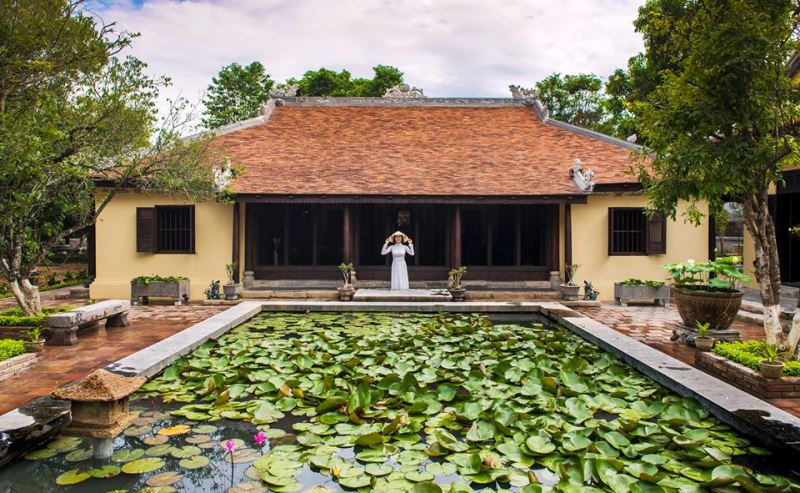
An Hien Garden House Overview
An Hien Garden House is one of the most representative traditional garden houses in Hue, preserving classic architecture and the lifestyle of Hue residents in the past. It is not only a residential space but also a unique cultural site, where homes, gardens, ponds, and auxiliary structures are harmoniously combined.
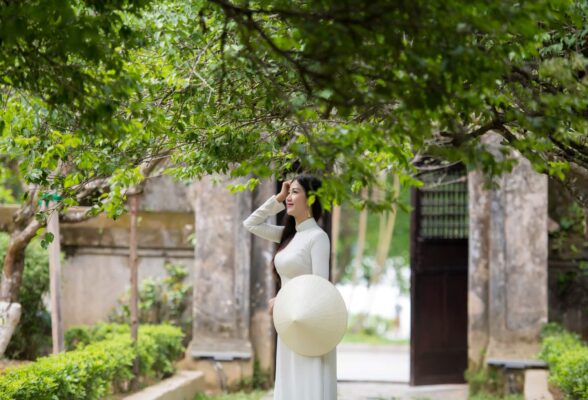
Visitors can explore the refined and peaceful way of life of noble families and wealthy residents in Hue’s history. With its tranquil atmosphere, green scenery, and traditional architecture, An Hien Garden House is an ideal destination for those who love culture, history, and photography.
An Hien Garden House Location
An Hien Garden House is located at 68 Nguyen Phuc Nguyen Street, on the north bank of Huong River (known as Perfume River), approximately 4 km from the center of Hue city.
Its convenient location makes it easy to combine with other nearby tourist attractions. Visitors can reach the garden house by motorbike, bicycle, taxi, or book a private tour. The approach via Nguyen Phuc Nguyen Street is particularly scenic, lined with trees, gardens, and riverside views, making the journey as enjoyable as the destination itself.
Many Hue tours also include An Hien Garden House alongside visits to royal tombs, pagodas, and other traditional garden houses.
History of An Hien Ancient House Hue
The first owner of An Hien Garden House, back in 1883, was the 18th daughter of Emperor Duc Duc. At that time, the residence served as her official palace and was named Phu An Hien. In 1895, the property came under the management of Pham Dang Khanh (also known as Thap), the son of a high-ranking mandarin during Emperor Gia Long’s reign and a nephew of Empress Mother Tu Du (Pham Thi Hang).
By 1920, Mr. Khanh transferred the entire garden estate to Tung Le, a wealthy landowner with numerous properties across the Tri-Thien region, known for his generosity and dedication to helping the poor. In 1936, Nguyen Dinh Chi, then the provincial chief of Ha Tinh, impressed by the owner’s virtuous reputation, decided to purchase An Hien Garden House to continue living within such a morally esteemed environment.
After Mr. Dinh Chi passed away in 1940, his wife, Dao Thi Xuan Yen (also known as Ba Tuan Chi), took over the management and preservation of the garden house, maintaining and enhancing its value until her death in 1997. Ba Tuan Chi was a pioneering Central Vietnamese woman, the first to study at Albert Sarraut School, earning the French Baccalaureate in 1933. She became the first female principal of Dong Khanh Girls’ High School in Hue during the 1950s and later served as a national assembly representative in the 1980s.
During their lifetimes, both Mr. Dinh Chi and Ba Xuan Yen were highly respected and influential figures, with wide social connections. An Hien Garden House became a frequent gathering place for intellectuals, artists, and literati, including renowned figures such as musician Pham Tuyen, poets Che Lan Vien and Huy Can, and writer Hoang Phu Ngoc Tuong. The house also welcomed hundreds of cultural and diplomatic guests, both domestic and international, establishing its reputation as a center of cultural and social significance in Hue.
During your stay in Hue, you may be interested in our Hue Tours such as the Hue city tour half day, the Hue city private tour, the Hue cycling Tour, and the Bach Ma National Park Tour.
After Hue city, you may need our private car transfer to other nearby cities such as
- Hue to Da Nang private car– 1,400,000 VND/ Sedan car.
- Hue to Hoi An private car– 1,500,000 VND/ Sedan car.
- Hue airport transfer– 300,000 VND/ Sedan car.
- Hue to Dong Hoi private car– 2,100,000 VND/ Sedan car.
- Hue to Phong Nha private car– 2,200,000 VND/ Sedan car.
Architecture of An Hien Garden House
An Hien Garden House was built in the 19th century, and its architecture follows traditional Hue garden house style, featuring a main house, inner courtyard, pond, garden, and auxiliary buildings. The main house is typically made of lim wood, with curved tiled roofs, intricately carved doors and windows, reflecting both elegance and refinement.

Surrounding gardens include fruit trees, bonsai, and ornamental plants, creating a peaceful green space. Details such as gates, fences, ponds, and miniature landscapes are carefully designed, showcasing the aesthetic taste and lifestyle of historical Hue residents.
What to see at this ancient Hue garden house?
Although An Hien Garden House has undergone several ups and downs in history and the rigors of time, it is now still a tranquil place and a contributor to amazing tourist attractions in Hue Imperial City.
The entrance
The entrance to An Hien Garden House opens through a small arched gate made of mortar and bricks, welcoming visitors into the lush garden. On either side of the entrance, two rows of intertwined apricot trees provide cool green shade, offering a refreshing respite during hot summer days.

The gate of An Hien Garden House faces the Perfume River, following traditional Feng Shui principles, which in Vietnamese culture are believed to bring prosperity, good health, and harmony to the family. This thoughtful combination of natural elements, architectural design, and cultural symbolism reflects the refined aesthetic of Hue’s traditional garden houses.
The Feng Shui screen
In traditional Vietnamese architecture, Feng Shui and privacy were highly valued, and An Hien Garden House reflects both principles beautifully. In the past, houses in Vietnam were often built as connected-room structures, with no tall buildings or walls like modern urban areas. This design made it easy for outsiders to see directly into the home, which created a need for privacy and protection for the family. To address this, a decorative screen was placed between the main gate and the entrance to the central house.

This screen, often inscribed with symbolic characters such as “Tho” for longevity, serves a dual purpose. First, it ensures privacy, shielding the interior spaces from direct view while allowing airflow and light to enter. Second, it plays an important role in Feng Shui, helping to direct energy positively into the home, ward off negative influences, and bring harmony, health, and prosperity to the residents. In this way, the Feng Shui screen is not just a decorative element but also a meaningful architectural feature that embodies traditional Vietnamese cultural values and the thoughtful planning of a garden house like An Hien.
The small pond
Just beyond the Feng Shui screen lies a small rectangular pond adorned with blooming water lilies, creating a serene and picturesque focal point in the garden. The pond serves multiple purposes: it is decorative, enhances Feng Shui, and also functions as a natural climate regulator. By cooling the surrounding air in the hot summer months and moderating temperatures in winter, the pond helps maintain a comfortable environment for the household.

In Oriental philosophy, Feng Shui combines two elements: “Feng”, meaning wind, and “Shui”, meaning water. The careful placement of the pond and other garden features reflects the art of balancing yin and yang, harmonizing natural elements, and channeling positive energy into the home. This thoughtful integration of aesthetics, environmental function, and cultural symbolism demonstrates how traditional Vietnamese garden houses, like An Hien, are designed to be both beautiful and functional.
The main house
As you move further into the garden, you will reach the main structure of An Hien Garden House, which forms the heart of the property. The house is designed with three central compartments flanked by two wings, all carefully positioned almost in the center of the garden to create a harmonious balance with the surrounding landscape. Every element of the architecture is delicately carved, reflecting the refined craftsmanship of traditional Hue garden houses.

The entire framework is constructed from high-quality wood, with 48 sturdy pillars supporting the structure. The truss system is made of durable jackfruit wood, while the rafters are crafted from ironwood, ensuring both strength and longevity. The roof is adorned with laminated tiles featuring intricately carved dragon motifs along the edges, symbolizing power and protection, and the center is decorated with a lotus flower, representing purity and harmony.
Inside, the house preserves ancient furnishings that are meticulously arranged and well-maintained. Traditional wooden furniture, cabinets, and decorative objects highlight the elegance and cultural sophistication of the original owners, offering visitors an authentic glimpse into the lifestyle and aesthetic values of Hue’s noble families.
The Orchard Garden
An Hien Garden House is not only a cultural and architectural treasure but also a truly ecological space, where the beauty and flavors of all four seasons can be experienced throughout the year. The garden is home to a wide variety of fruit trees, including lychee from northern Vietnam, tropical favorites such as mangosteen, durian, jackfruit, and dragon fruit from the south, as well as strawberries and figs typical of Central Vietnam. This diverse collection of plants reflects the careful cultivation and knowledge of horticulture passed down through generations.
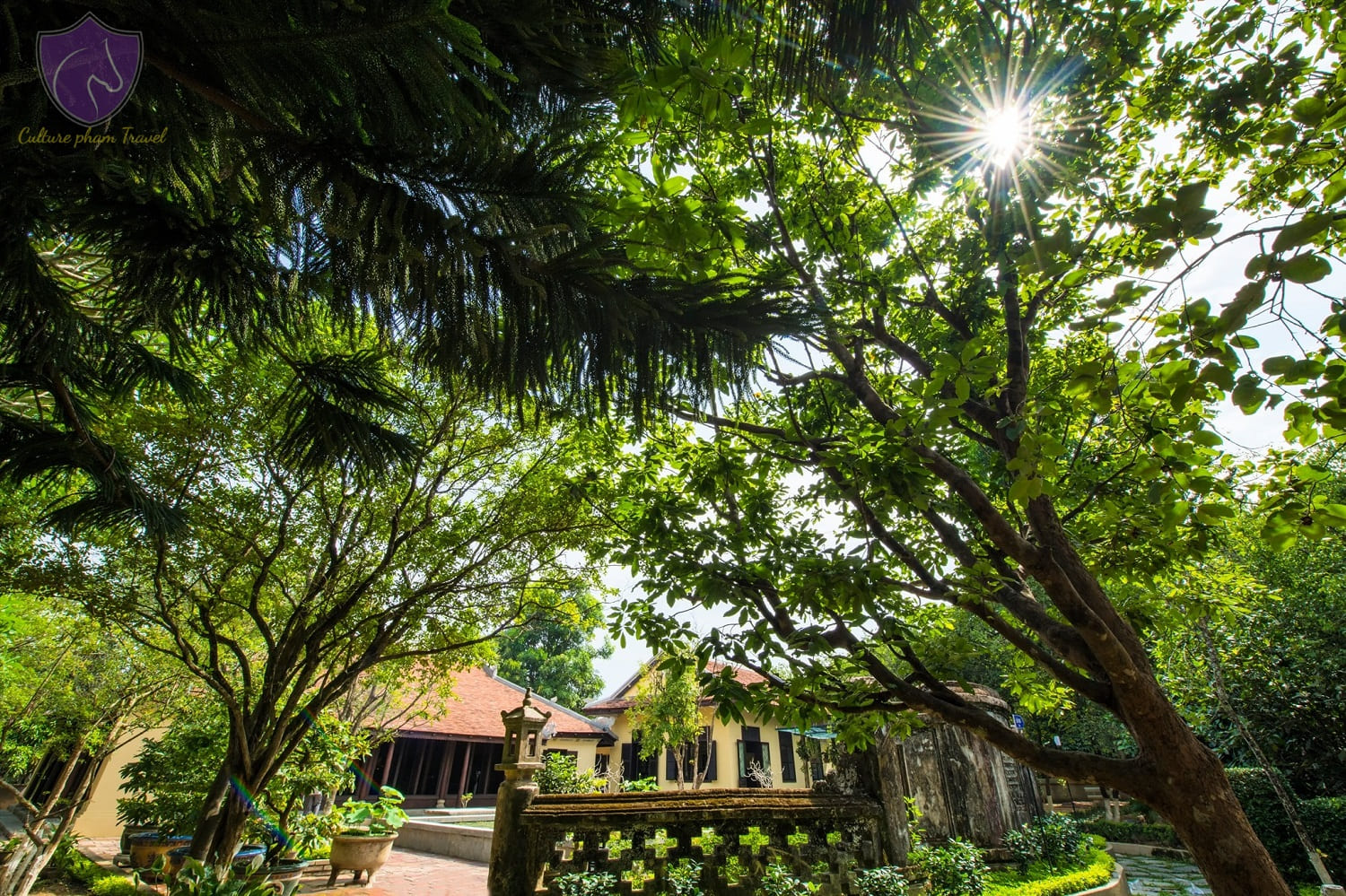
Many of the trees in the garden are decades old, providing natural shade, a cool environment, and a sense of timelessness that complements the traditional architecture of the house. The seasonal fruits not only enhance the aesthetic and ecological value of the garden but also allow visitors to experience the tastes and scents of Vietnam’s different regions in one serene space. The combination of fruit trees, flowering plants, and carefully maintained landscaping creates a harmonious, living ecosystem, demonstrating how traditional Hue garden houses integrate culture, nature, and sustainable design.
An Hien Garden House entrance fee & opening hours
Once the residence of a Nguyen Dynasty princess, An Hien has quietly endured the tides of change, crafting its own story in the heart of Hue. Serene yet dignified, it has become an inseparable part of the cultural memory of the ancient capital.
Their fanpage: https://www.facebook.com/AnHienGardenHouse
The garden house mobile: +84862460068
Opening hours: 8:00 AM – 5:00 PM daily, including public holidays.
Admission fee: 50,000 VND per person (roughly 1.5 USD), applicable to both Vietnamese and international visitors. Children under 1.2 meters enter free of charge.
Useful Tips for Visiting
Visitors should wear appropriate and comfortable clothing, especially when photographing inside the main house or near sacred areas. Comfortable shoes are recommended, as some paths are narrow or slightly uneven. Guests should also maintain cleanliness, avoid damaging plants or antiques, and respect the peaceful environment.
Some Famous Nearby Attractions
Thien Mu Pagoda
Thiên Mụ Pagoda, also known as the “Heavenly Lady Pagoda,” is a historic Buddhist temple situated on the banks of the Perfume River. The pagoda is famous for its seven-story tower and serene riverside setting. Visitors can explore its ornate halls, sacred statues, and peaceful gardens. Thiên Mụ Pagoda is not only a spiritual site but also an iconic symbol of Hue’s cultural and religious heritage.
Hue Temple Of Literature
Hue Temple of Literature is a well-preserved Confucian temple dedicated to education and scholars. It features traditional architecture, courtyards, and stone stelae honoring successful graduates. Visitors can learn about the role of Confucianism in Vietnamese culture and the history of education in Hue. The temple’s tranquil ambiance and historical significance make it a must-visit cultural site near An Hien Garden House.
Vong Canh Hill
Located just a short drive away, Vong Canh Hill offers panoramic views of the Perfume River and surrounding mountains. It is ideal for sunset viewing and photography, providing a peaceful and romantic atmosphere for visitors. The gentle slopes and pine-covered hills create a serene environment for walking and relaxation. From the hilltop, travelers can enjoy one of the most iconic views of Hue’s natural landscape.
Tu Duc Tomb
Tu Duc Tomb is one of the most beautiful royal tombs of the Nguyen Dynasty. Visitors can enjoy tranquil lakes, pine forests, and elegant architecture. The serene setting and romantic atmosphere make it a must-see attraction near An Hien Garden House. Its thoughtful layout and poetic scenery reflect the refined taste and lifestyle of Emperor Tu Duc.
Pingback: HUE TOURS AND THINGS TO DO IN HUE - Culture Pham Travel
Pingback: Vong Canh Hill- a fabulous sightseeing place in Hue - Culture Pham Travel
Pingback: Huyen Khong Son Thuong Pagoda - Culture Pham Travel