
Thuy Xuan Incense Village Introduction
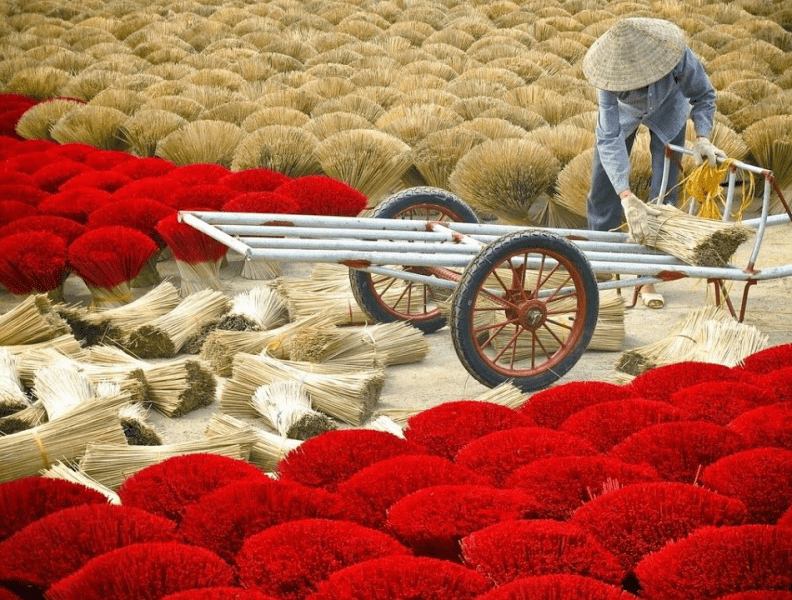
Thuy Xuan Incense Village is one of the most famous and long-standing traditional craft villages in Hue. The village is well known not only for its centuries-old handmade incense production but also as a unique cultural destination that attracts visitors from around the world. Colorful bundles of incense sticks displayed along the roadside create a vibrant and picturesque scene that has become a signature image of this traditional village.

Beyond being a place where incense is produced for spiritual and religious practices, Thuy Xuan Village also preserves important cultural values of the local community. The incense-making craft has been part of the villagers’ daily lives for generations. Today, in addition to manufacturing incense, the village has developed community tourism, allowing travelers to explore and learn about this fascinating traditional craft.
Hue Incense Making Village Location
Thuy Xuan Incense Village is located on Huyen Tran Cong Chua Street in Thuy Xuan Ward, about 7 kilometers southwest of Hue city center. This road is a well-known tourist route leading to several famous attractions in Hue, including royal tombs and scenic viewpoints.

Thanks to its convenient location, travelers can easily combine a visit to the incense village with other sightseeing destinations around Hue. From the city center, it takes only about 15–20 minutes by car or motorbike to reach this colorful and culturally rich village.
Thuy Xuan Incense Village History
According to historical records, the incense-making craft in Thuy Xuan Village dates back more than 700 years. In the early days, villagers mainly produced incense to serve the spiritual needs of local families and nearby temples and pagodas.

During the Nguyen Dynasty, when Hue became the imperial capital of Vietnam, the incense-making industry in Thuy Xuan flourished. The village supplied incense for the royal court as well as for temples, shrines, and royal tombs. This royal demand helped improve the quality and craftsmanship of incense production in the village.
Despite historical changes and modernization, the people of Thuy Xuan have continued to preserve their traditional craft. Today, many families still pass down the incense-making techniques from one generation to the next, helping to maintain this unique cultural heritage of Hue.
How to reach this beautiful village?
Thuy Xuan incense village is located on the main tourist road of the locality, which has long been associated with the sights of Tu Duc Mausoleum, Vong Canh hill, and Tu Hieu pagoda. So this is also the ideal destination for tourists to finish the wonderful day after enjoying the Hue City Tour, the Hue Street Food Tour, or the Hue Royal Tombs Tour
If not, you can ride a bike, drive a scooter with a helmet, or even take a dragon boat along the Perfume River to explore Hue Incense Village.
What makes Hue Incense Village attractive?
Natural Ingredients
Traditional incense in Thuy Xuan Village is made from a mixture of natural herbs and aromatic plants. Common ingredients include cinnamon powder, agarwood, cloves, star anise, cardamom, and other forest herbs. These materials are finely ground and carefully blended in specific proportions to create the distinctive fragrance of the incense.
The incense sticks themselves are usually made from thin bamboo sticks. The lower part of the sticks is often dyed with bright colors, which later create the iconic colorful bundles seen throughout the village.
Because natural ingredients are used, Thuy Xuan incense produces a gentle and pleasant aroma without the harsh smell often found in industrial incense.

Traditional Handmade Process
The incense-making process in Thuy Xuan Village is still largely done by hand. First, the incense powder mixture is combined with natural glue to create a soft, sticky paste. Bamboo sticks are then rolled evenly in the mixture until they are fully coated.
Afterward, the incense sticks are laid out under the sun to dry naturally. When the sticks are arranged in circular bundles for drying, they resemble large, colorful flowers blooming in the sunlight. This beautiful image has become a signature feature of the village.

Family Secrets and Techniques
One of the most important factors that determines the quality of Thuy Xuan incense is the secret recipe passed down within families. The proportions of herbs, the mixing process, and even the drying time all influence the final fragrance and quality of the incense.
These traditional techniques ensure that Thuy Xuan incense burns evenly and produces a long-lasting, pleasant aroma, making it highly valued by many customers.

The Colorful Beauty of Incense Bundles
One of the most captivating sights in Thuy Xuan Incense Village is the display of vibrant incense bundles placed along the village road. The incense sticks are dyed in bright colors such as red, yellow, purple, and green, creating an incredibly lively and eye-catching scene.
When arranged in circular patterns for drying, the bundles resemble giant flowers blooming under the sunlight. This unique visual has made the village a popular photo spot for travelers and photographers visiting Hue.
Things to do at Thuy Xuan Incense Village Hue
Taking Photos with Colorful Incense Bundles
Taking photos with the colorful incense bundles is one of the most popular activities in Thuy Xuan Incense Village. The incense sticks are arranged in bright circular displays while drying under the sun, creating a scene that looks like large blooming flowers. This vibrant setting has made the village a favorite photography spot for visitors to Hue.
Many households have set up small photo areas where travelers can pose with the incense displays. Visitors can also rent a traditional Vietnamese Ao Dai from local families to wear while taking photos. Wearing an Ao Dai among the colorful incense bundles creates a unique cultural atmosphere and memorable photos of Hue.
Learning About the Incense-Making Process
Visitors can observe local artisans carefully making incense by hand, following traditional techniques that have been passed down through many generations. Watching the craftsmen mix natural ingredients, roll the incense onto bamboo sticks, and arrange them in colorful bundles to dry under the sun offers a fascinating glimpse into this centuries-old craft.
Many artisans are friendly and happy to share stories about their family traditions as well as explain each step of the incense-making process. Through these conversations, visitors can gain a deeper understanding of the cultural and spiritual importance of incense in Vietnamese daily life. This experience makes a visit to Thuy Xuan Incense Village not only visually beautiful but also culturally meaningful.
Trying to Make Incense Yourself
Another interesting activity is the opportunity to try making incense sticks yourself under the guidance of local artisans. This hands-on experience allows visitors to better understand the patience and skill required in this traditional craft.
Best Time to Visit Thuy Xuan Incense Village
Thuy Xuan Incense Village can be visited at any time of the year. However, sunny days are considered the best time to visit because villagers often place large quantities of incense outside to dry, creating the colorful scenery the village is famous for.
Morning and late afternoon are particularly good times for photography, as the sunlight is softer and more suitable for capturing beautiful images.
Hue Incense Village Entrance Fee and Opening Hours
Currently, visiting Thuy Xuan Incense Village is completely free of charge, allowing travelers to freely explore the village, take photos, and interact with local artisans. Visitors can walk along the village road where colorful incense bundles are displayed and learn about the traditional craft from the friendly local families.
Most incense workshops and small shops in the village are open daily from around 7:00 AM to 6:00 PM. Some households also allow visitors to observe or even try the incense-making process at no cost. To support the local community and help preserve this traditional craft village, visitors are encouraged to purchase some incense products or small souvenirs made by the families.
Nearby Attractions
Tu Duc Tomb
The tomb of Emperor Tu Duc is considered one of the most beautiful and poetic royal tombs of the Nguyen Dynasty. Built between 1864 and 1867, the complex served not only as the emperor’s final resting place but also as a retreat where he could relax, write poetry, and enjoy nature during his lifetime.
The site features serene lotus lakes, elegant pavilions, and pine-covered hills that create a peaceful and romantic atmosphere. Visitors can explore impressive structures such as Xung Khiem Pavilion, Luu Khiem Lake, and the royal theater, all reflecting the refined taste and artistic spirit of Emperor Tu Duc.
Vong Canh Hill
Vong Canh Hill is one of the most scenic viewpoints in Hue, offering breathtaking panoramic views of the surrounding landscapes. From the top of the hill, visitors can admire the gentle curves of the Perfume River flowing through lush green forests and royal tomb areas.
The hill is also covered with tall pine trees, creating a cool and relaxing environment perfect for sightseeing and photography. It is especially popular during sunrise and sunset, when the golden light creates a magical view over the river and countryside.
Dong Khanh Tomb
Dong Khanh Tomb is a unique royal mausoleum that reflects the transition between traditional Vietnamese architecture and Western influences. Construction of the tomb began in the late 19th century and was completed during the reign of Emperor Khai Dinh.
The complex features a mix of traditional royal structures along with decorative elements influenced by French and European artistic styles. Visitors can admire detailed ceramic mosaics, colorful interior decorations, and impressive royal halls that make this tomb different from other Nguyen Dynasty mausoleums.
Travel Tips for Visiting the Village
Visitors should respect the working space of local artisans and avoid disturbing their production activities. When taking photos inside workshops or family houses, it is polite to ask for permission first. Buying a few incense bundles as souvenirs is also a great way to support local families and help preserve this traditional craft.
Pingback: Thanh Tien Paper Flower Village- Hue Craft Villages - Culture Pham Travel
Pingback: Hue Traditional Craft Villages - Culture Pham Travel