
Overview
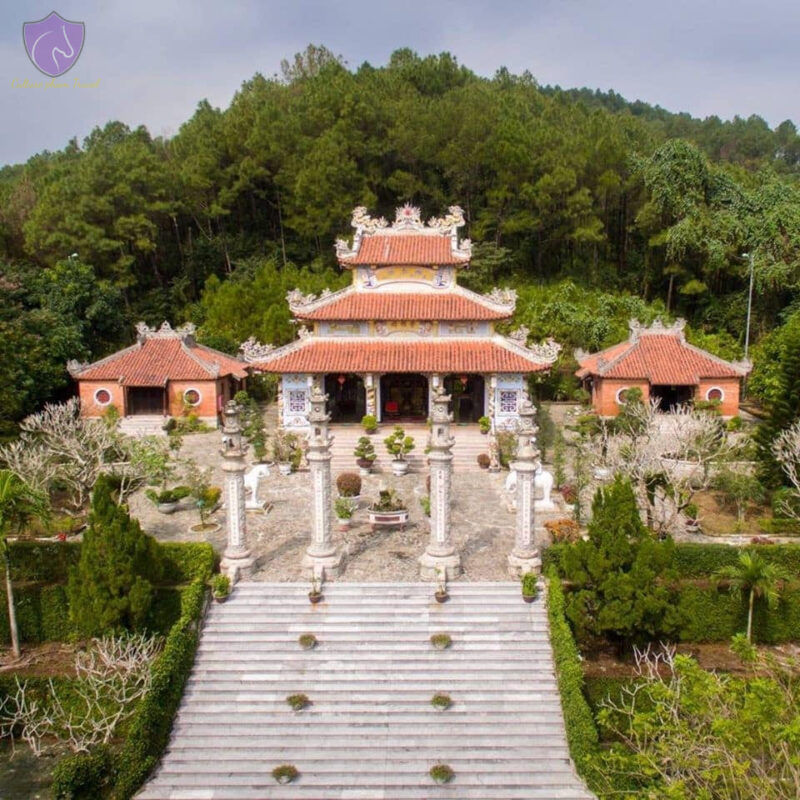
Nestled on the peaceful slopes of Ngu Phong Mountain in Hue, Huyen Tran Princess Temple is a spiritual and historical site that honors one of Vietnam’s most remarkable royal women. More than just a temple, it is a tribute to patriotism, diplomacy, and the territorial expansion that shaped the nation’s history.
Surrounded by pine forests and overlooking the poetic landscape of Hue, the temple offers visitors not only historical insight but also tranquility and reflection.
Who Was Princess Huyen Tran?
Historical Background
Princess Huyen Tran (1287–1340) was the daughter of King Tran Nhan Tong, the third emperor of the Tran Dynasty (1225–1400). The Tran era is remembered as one of the most glorious periods in Vietnamese history, particularly for its victories against Mongol invasions and strong national unity.
The Political Marriage That Changed History
In 1306, Princess Huyen Tran married King Che Man of Champa as part of a diplomatic agreement. In exchange for this marriage, Champa ceded two important territories: the O and Ly provinces to Dai Viet. These lands correspond to present-day Quang Tri and Thua Thien Hue provinces.
This agreement marked a peaceful southward expansion of Dai Viet and laid the foundation for Vietnam’s later territorial development. Though her marriage required personal sacrifice, Princess Huyen Tran’s contribution significantly shaped the country’s geographic map.
Her Legacy
Princess Huyen Tran is remembered as a symbol of devotion to national interests above personal happiness. Her story reflects themes of diplomacy, sacrifice, and cultural exchange between Dai Viet and Champa, two neighboring civilizations of the time.
Where Is Huyen Tran Princess Temple?
Huyen Tran Princess Temple is located at the foot of Ngu Phong Mountain in An Tay Ward, Hue City (formerly part of Thuy An Commune). The temple complex covers an expansive area of approximately 28.5 hectares, offering a peaceful and scenic environment away from the busy city center.
Address: 151 Thien Thai Street, An Tay Ward, Hue City, Vietnam.
The terrain gently rises from the base of the mountain to higher elevations, surrounded by lush pine forests and rolling hills on all sides. This natural setting creates a quiet, spiritual atmosphere that perfectly complements the historical significance of the site.
From the higher points of the complex, especially near the Peace Bell Tower, visitors can enjoy wide panoramic views of Hue’s countryside and, in the distance, the charming landscape of Hue City itself. The combination of history, nature, and open views makes the temple both a cultural landmark and a scenic destination.

How to visit Princess Temple?
There are many ways to go to Huyen Tran Temple, including taking a grab bike or catching a taxi. To explore more historical sights, you should book a Hue city tour 1 day at Culture Pham Travel.
Travel from Hue to Hoi An by private car or Hoi An to Hue private car, Jeep Tour from Hue to Hoi An, you can request our driver to stop at Huyen Tran Temple to visit and admire the beautiful cultural complex here.
History of Huyen Tran Princess Temple
In recognition of Princess Huyen Tran’s historic contribution to the territorial expansion of the nation, the Huyen Tran Princess Temple was initiated in 2006, marking the 700th anniversary of the land of Thuan Hoa – Phu Xuan – Thua Thien Hue.
Hue has long been regarded as one of the three major centers of Buddhism in Vietnam. As a result, Buddhism has profoundly influenced both the spiritual and material life of the local people.
Reflecting this rich cultural foundation, the Huyen Tran Cultural Center harmoniously integrates traditional Buddhist values with elements of royal court architecture, creating a space that embodies both spiritual depth and imperial elegance. The temple stands as a cultural reminder of Vietnam’s long history of territorial formation and peaceful negotiation.
Architecture and Layout of the Complex
Overall Setting
The temple is built on Ngu Phong Mountain, offering open views and a peaceful natural environment. The setting reflects traditional feng shui concepts, with mountains at the back and open space in front, symbolizing stability and harmony. The complex covers a large area and includes several important structures connected by pathways and stairways.
The three-door gate and pillars
Going through via four high pillars, a large yard paved with Bat Trang brick, and fresh lakes on both sides. We will see the main entrance built by 3 door gate styles leading to Huyen Tran Temple.

The Huyen Tran Princess Temple
The central sanctuary is dedicated to Princess Huyen Tran. The architecture follows traditional Vietnamese temple design, featuring:
- Curved tiled roofs
- Wooden columns and beams
- Decorative dragon and phoenix motifs
- A solemn altar and statue of the Princess
The atmosphere is respectful and serene, inviting visitors to reflect on her historical contribution.
Inside the main sanctuary stands a bronze statue of Princess Huyen Tran seated solemnly on a royal throne. The statue is 2.37 meters tall and was cast by skilled artisans from Phuong Duc Ward in Hue, an area long renowned for its traditional bronze-casting craftsmanship.

Behind the main hall, the rear chamber (Hau Dien) is dedicated to Doan Nhu Hai, a distinguished mandarin of the Tran Dynasty. He is remembered as the scholar who drafted an official petition that helped Emperor Tran Anh Tong appease the anger of the retired Emperor Tran Nhan Tong. Historically, Doan Nhu Hai was also the first Vietnamese official appointed by the court to govern the newly acquired territories of Chau O and Chau Ly after they were ceded by Champa and incorporated into Dai Viet.
The stepway and 2 giant dragons
A wide stone stairway leads visitors from the entrance up to the main temple complex, creating a gradual and symbolic ascent. The pathway is surrounded by green trees and open space, offering a peaceful and contemplative walk. Along the stairway, two giant stone dragons stretch gracefully on both sides, forming an impressive ceremonial approach.

These long dragons are crafted in traditional Vietnamese style, with curved bodies and finely detailed scales. In Vietnamese culture, dragons symbolize power, protection, and royal authority, making them especially meaningful in a temple associated with royal history. Together, the stairway and the twin dragons create a majestic entrance that reflects both spiritual reverence and imperial elegance.
Temple of King Tran Nhan Tong
Within the same complex stands a temple honoring King Tran Nhan Tong, the third emperor of the Tran Dynasty. He is revered not only as a wise monarch but also as a national hero who led Dai Viet to victory against the Mongol invasions. After abdicating the throne, he devoted his life to Buddhism and founded the Truc Lam Zen sect, the first distinctly Vietnamese school of Zen.

Inside the temple, a dignified statue of King Tran Nhan Tong is placed at the main altar. The sculpture portrays him in a calm and meditative posture, reflecting his later life as a monk and spiritual leader. His serene expression symbolizes wisdom, compassion, and enlightenment. The statue, together with the solemn architecture of the hall, creates a peaceful atmosphere that honors both his royal achievements and his profound spiritual legacy.
The Hoa Binh Bell & Happy Buddha Statue
Within the Huyen Tran Cultural Center complex, several other notable architectural structures can be found. One highlight is the Peace Bell Tower (Tháp Chuông Hòa Bình), which stands 7 meters tall on the summit of Ngu Phong Mountain. The tower houses a large bronze bell weighing approximately 1.6 tons and measuring 2.16 meters in height, crafted by skilled artisans from the renowned bronze-casting village of Phuong Duc in Hue. When the bell is rung, its deep, resonant sound spreads across the quiet landscape, creating a serene atmosphere and offering visitors a sense of calm and reflection.

Along the path leading up to the Peace Bell Tower, visitors will also encounter a giant statue of Maitreya Buddha (Phật Di Lặc). The statue depicts the Buddha with his characteristic radiant smile, symbolizing joy, prosperity, and spiritual fulfillment. Together, these elements enhance the tranquil and contemplative experience of the site.

The Huyen Tran Temple Festival
The Huyen Tran Temple Festival is held annually on the 9th day of the first lunar month to commemorate Princess Huyen Tran’s contributions to the nation. The festival attracts local residents, pilgrims, and visitors from across Vietnam who come to pay tribute and offer incense. Traditional rituals are performed in a solemn atmosphere to honor the Princess and King Tran Nhan Tong.

The event also features cultural activities such as folk performances, traditional music, and ceremonial processions. Beyond its spiritual meaning, the festival serves as an opportunity to educate younger generations about national history and the peaceful expansion of Dai Viet. It has become one of the important cultural events in Hue during the Lunar New Year season.
Princess Huyen Tran: The Rescue Story
The rescue of Princess Huyen Tran is one of the most remarkable stories in Vietnamese history, unfolding after King Che Man passed away in 1307. According to Champa customs, the queen was expected to follow her husband in death by being cremated on the funeral pyre.
Facing this dangerous situation, the Tran court sent Tran Khac Chung to Champa under the guise of paying respects, but his true mission was to bring the princess safely back to Dai Viet.
Using careful planning and remarkable courage, Tran Khac Chung organized her escape by sea, taking advantage of the dense fog and mist over the ocean to evade detection by Champa guards.
After months of navigating treacherous waters, the fleet finally reached safe harbor, and the princess returned home. This daring and clever operation not only demonstrated the Tran court’s devotion to the royal family but also became a legendary tale celebrated in Vietnamese history and folklore.
Useful Travel Tips
Huyen Tran Temple Opening Time
Visitors to Huyen Tran Princess Temple are welcome daily, with standard opening hours from 7:00 AM to 5:00 PM.
Huyen Tran temple entrance fee
Entrance to the temple complex typically requires a modest ticket, which helps support maintenance and cultural preservation. The fee is generally affordable, which cost 30.000VND (roughly $1.5 USD) per adult and is free for children under 6 years old.
Huyen Tran Temple Dress Code
As a sacred and historical site, the temple asks visitors to dress respectfully and modestly, avoiding shorts, sleeveless tops, or overly casual beachwear. Comfortable shoes are recommended, as the site involves walking and gradual stairways up the hillside. Observing the dress code and visiting within opening hours helps ensure a pleasant and culturally respectful experience for everyone.