
Introduction
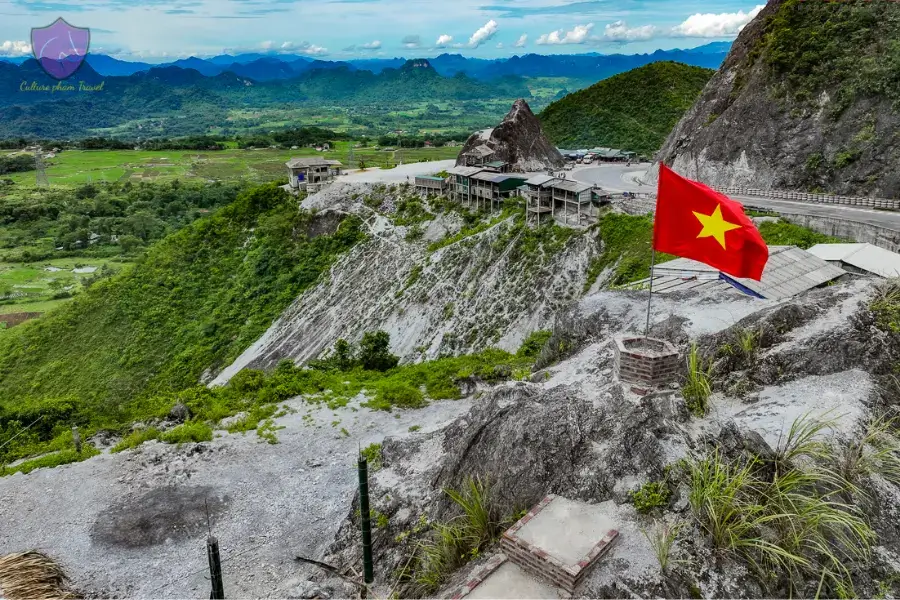
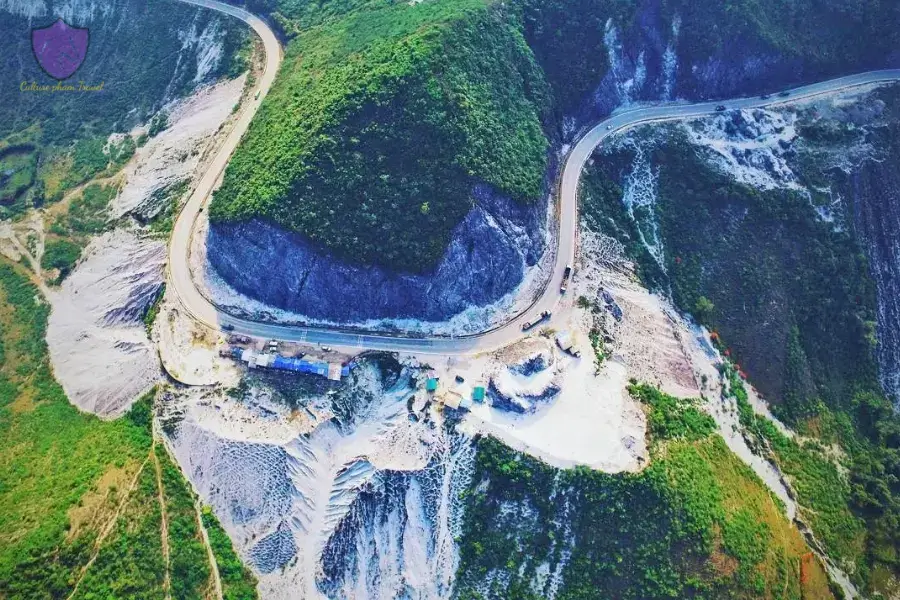
Few mountain drives in Northern Vietnam deliver a first impression quite like the ascent up National Highway 6 (QL6) toward Mai Chau. As your vehicle navigates the sweeping hairpins of Hoa Binh province, the dense green jungle abruptly gives way to dramatic, blindingly white limestone cliffs. Here you meet Thung Khe Pass, known locally as Đèo Thung Khe or Đèo Đá Trắng (White Rock Pass).
For travelers heading from Hanoi to Mai Chau, Pu Luong, or Son La, this iconic mountain pass is far more than a highway pitstop. It is a striking geological transition zone where raw karst landscapes meet the warm hospitality of the local Muong ethnic community.
Having guided countless journeys along this winding mountain highway, the Culture Pham Travel team created this practical insider overview to help you navigate, photograph, and experience White Rock Pass like a seasoned local.
What Is Thung Khe Pass? Why Is It Called White Rock Pass?
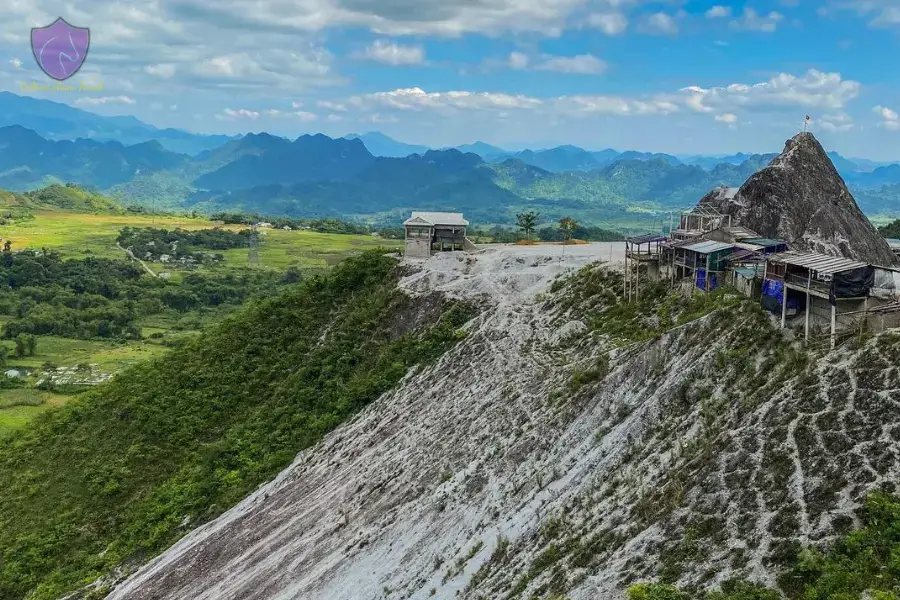
Standing at an elevation of roughly 1,000 meters above sea level, Thung Khe Pass is a high-altitude mountain pass stretching across the border of Tan Lac and Mai Chau districts in Hoa Binh province.
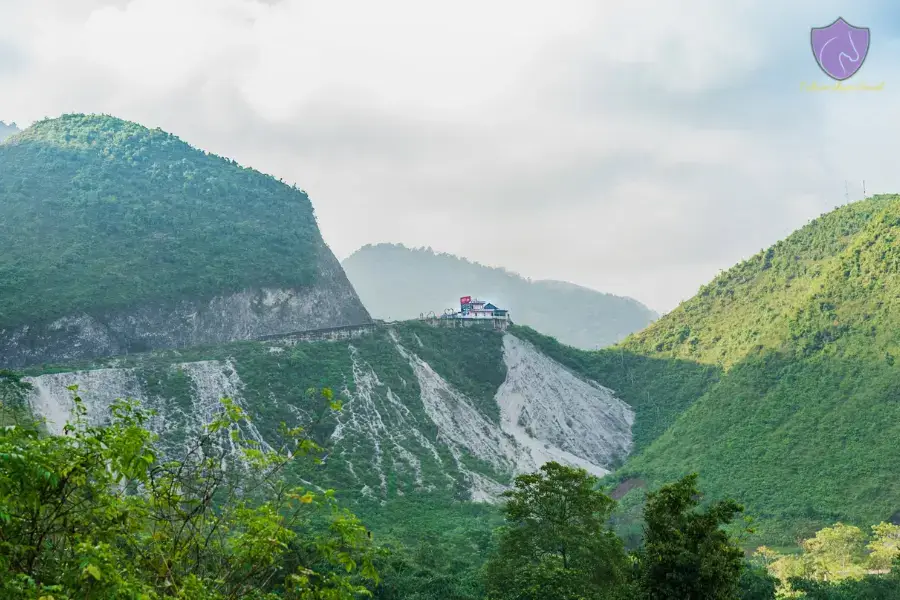
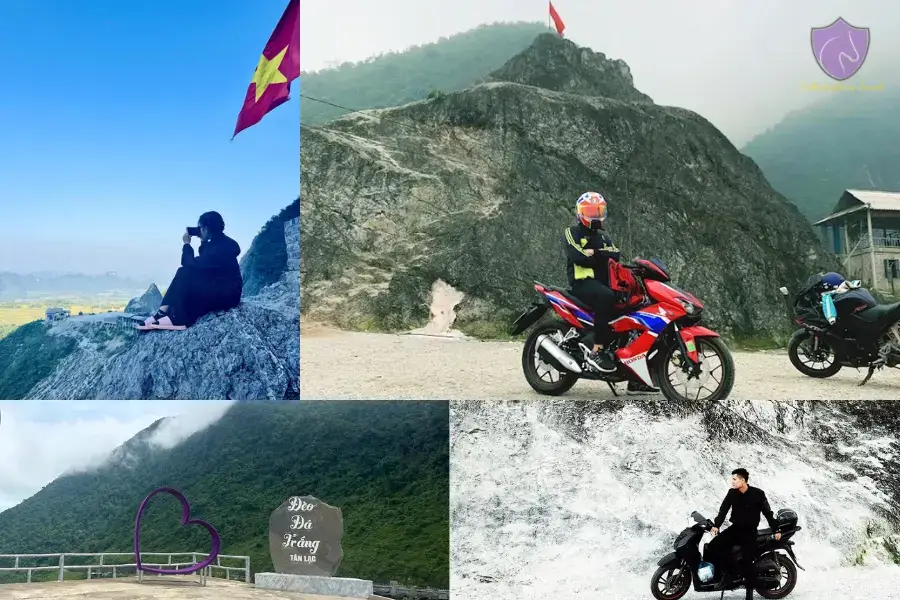
Unlike the ancient, moss-covered peaks of the surrounding Northwest region, the defining feature of Đèo Đá Trắng is its dramatic white terrain. The pass gained its famous “snow-capped” appearance purely by engineering accident.
During the excavation and blasting of QL6 through the limestone cliffs, massive shifts of pale, crushed limestone rock were exposed along the mountain face. Over time, erosion washed the fine white dust across the cliffs and road shoulders.
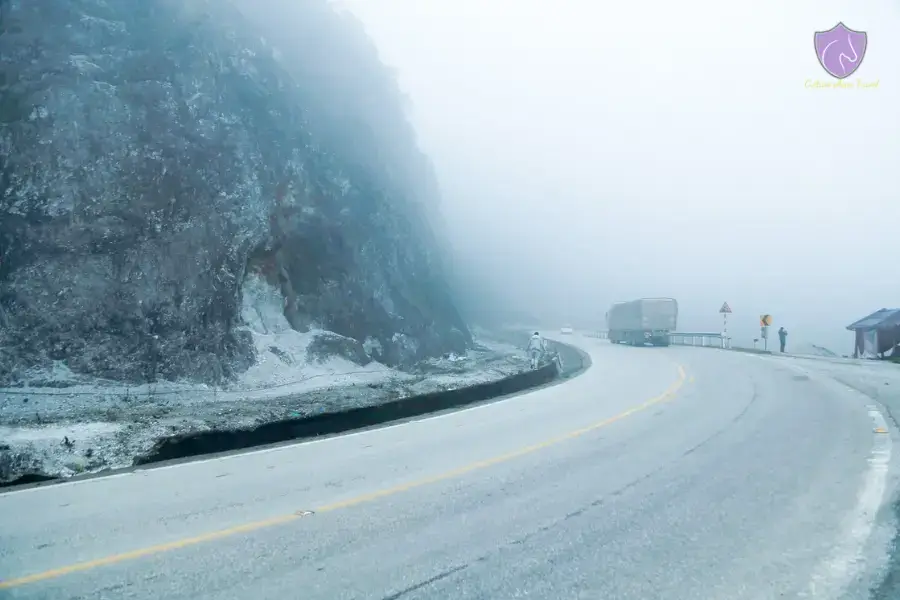
When morning fog or low-hanging mountain mist rolls through the pass, the chalky limestone cliffs resemble a European winter landscape. This scene earns it the affectionate nickname White Rock Pass Vietnam.
Where Is Thung Khe Pass Located?
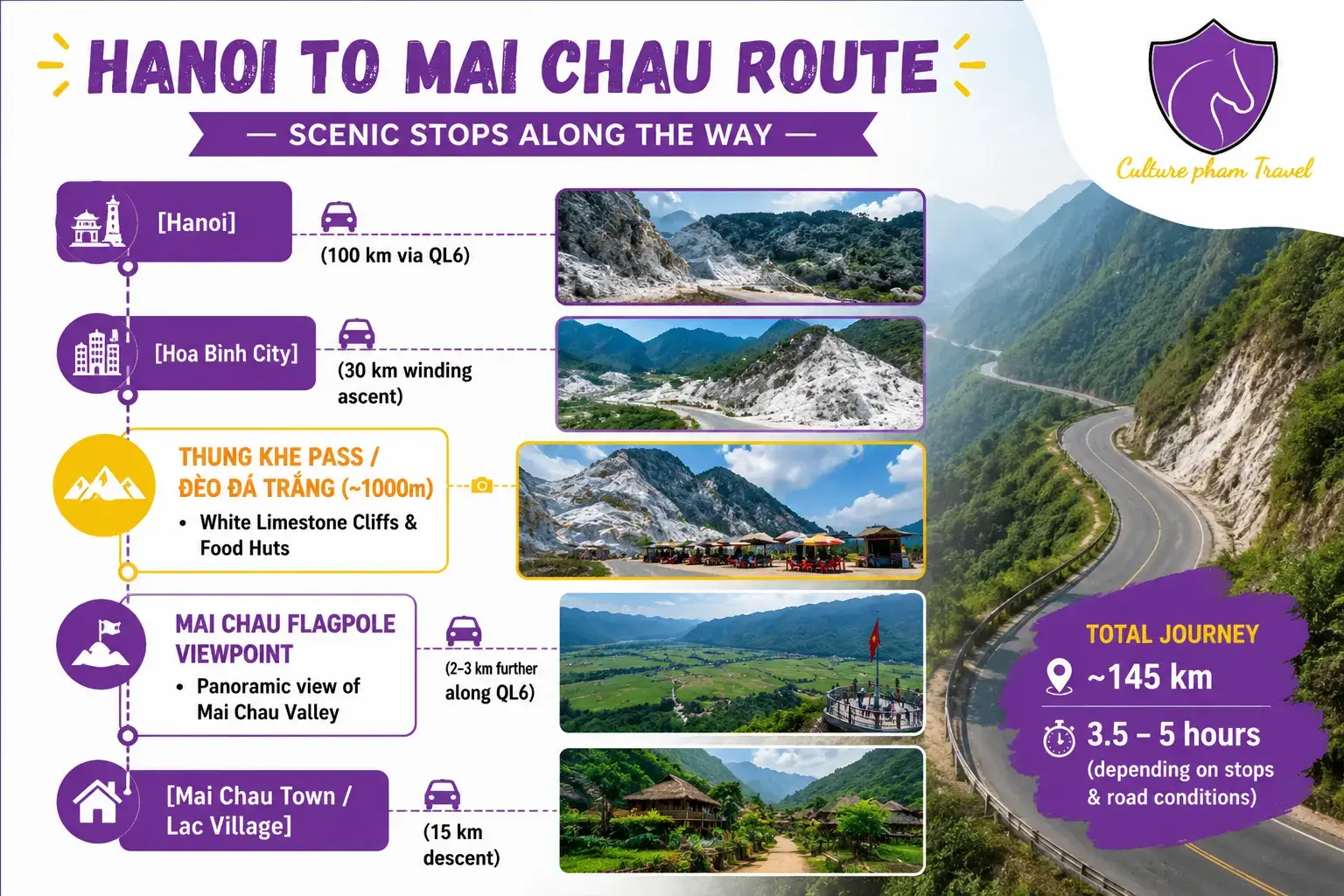
If you are mapping your route from Hanoi to Thung Khe Pass, the pass is situated roughly 120 kilometers southwest of Hanoi and about 18 kilometers before Mai Chau town.
Spatial Context & Distances:
- Hanoi to Thung Khe Pass: ~120 km (3 to 3.5 hours drive via Highway QL6).
- Hoa Binh City to Thung Khe Pass: ~45 km along the mountain highway.
- Thung Khe Pass to Mai Chau Valley: ~18 km (a 25-minute scenic downhill drive).
- Thung Khe Pass to Pu Luong Nature Reserve: ~60 km via QL15.
Local Expert Navigation Tip: When using Google Maps or offline navigation apps, search for “Đèo Đá Trắng” or “Đèo Thung Khe”. Avoid setting your destination merely to “Thung Khe,” which may direct you to the underlying agricultural commune rather than the scenic highway pass and market area.
White Rock Market vs Mai Chau Flagpole Real Locations
Many generic online guides confuse these two spots, but a true local traveler knows they are two distinct stops located a few minutes apart along Highway 6:
- The White Rock Pass Market Area (Chợ Đèo Đá Trắng)
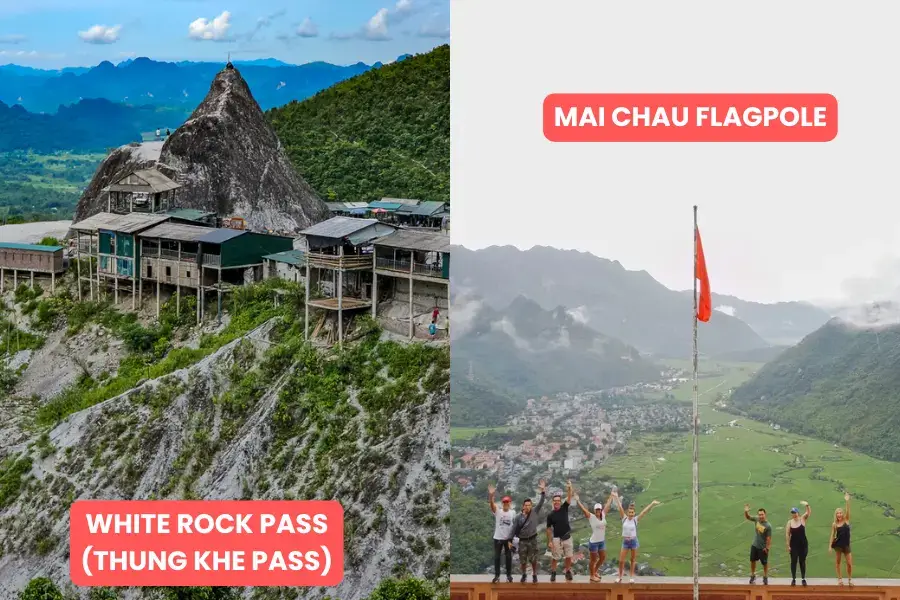
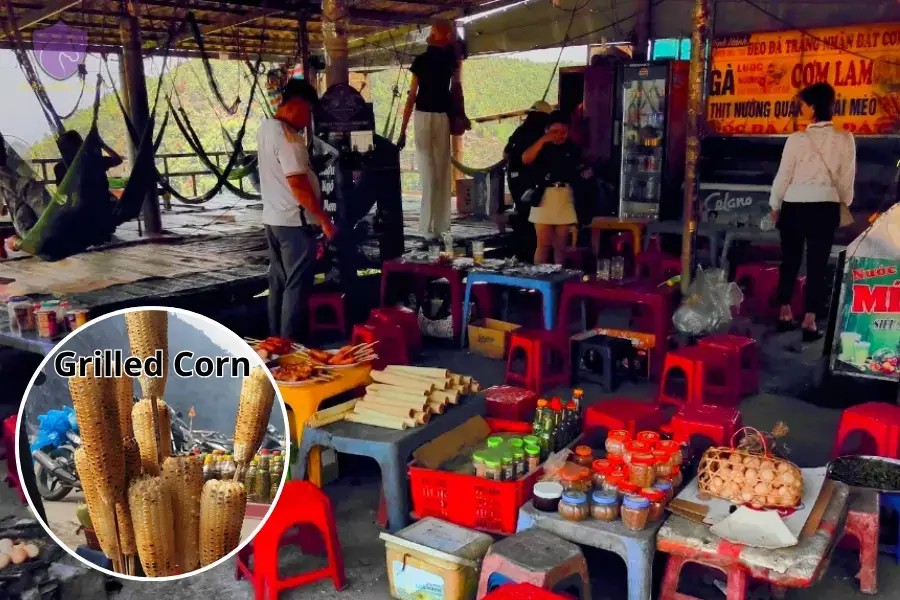
This is the core geological landmark. Located on a sweeping hairpin turn, this site features blinding white limestone cliffs, a cluster of wooden Muong market stalls, rustic photo platforms, and food vendors grill snacks over open charcoal braziers. It’s the best spot for close-up cliff photography, cultural interactions, and warm food breaks.
- The Mai Chau Flagpole Viewpoint (Cột Cờ Mai Châu)
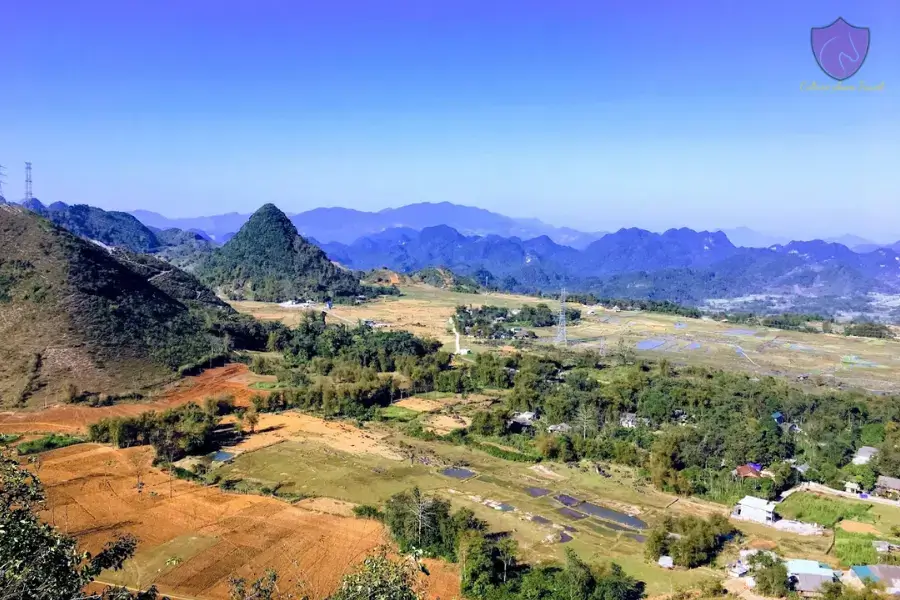
Located approximately 2.5 kilometers past the market area as you begin descending toward the valley, the Mai Chau Flagpole features a prominent Vietnamese flag flying high over a paved cliffside lookout. This is the absolute best Thung Khe Pass panoramic viewpoint. It offers an unobstructed, bird’s-eye vista of the emerald rice paddies, stilt-house hamlets, and patchwork fields of Mai Chau Valley below.
How to Get to Thung Khe Pass from Hanoi & Mai Chau
Navigating to Thung Khe Pass is straightforward because it sits directly on National Highway 6 (QL6). It’s the main artery connecting Hanoi to the Northwestern provinces.
The common driving route will basically look like this:
- Hanoi to Hoa Binh City: ~70 km via QL6 (Paved Highway)
- Hoa Binh to Thung Khe Pass: ~45 km (Winding Mountain Highway)
- Thung Khe Pass to Mai Chau Town: ~18 km (Scenic Mountain Descent)
By Private Car or Limousine Bus
- Private Car/Taxi: The journey takes approximately 3 to 3.5 hours from central Hanoi. Hiring a private car with an experienced local driver allows you to stop freely at the pass market and flagpole without rushing.
- Limousine Vans: Shared 9-seater Dcar Limousines run daily from Hanoi (Old Quarter or My Dinh) directly to Mai Chau. Most operators are happy to drop you off at Thung Khe Pass for a 20-minute break if requested in advance, or you can catch the view through the panoramic windows.
If you want to discover northern Vietnam with Thung Khe Pass in your itinerary, we got you. Check out Hanoi to Pu Luong private car or Hanoi to Mai Chau private car. This service lets you sit comfortably in an A/C car and stop at the pass and other attractions along the way.

By Motorbike
Riding a motorcycle from Hanoi to Thung Khe Pass is a rite of passage for road-trippers in Vietnam.
- Route: Exit Hanoi via Nguyen Trai Street → Highway QL6 through Xuan Mai → Hoa Binh City → Slope 81 (Dốc 81) → Thung Khe Pass.
- Riding Time: Around 3.5 to 4 hours with rest stops.
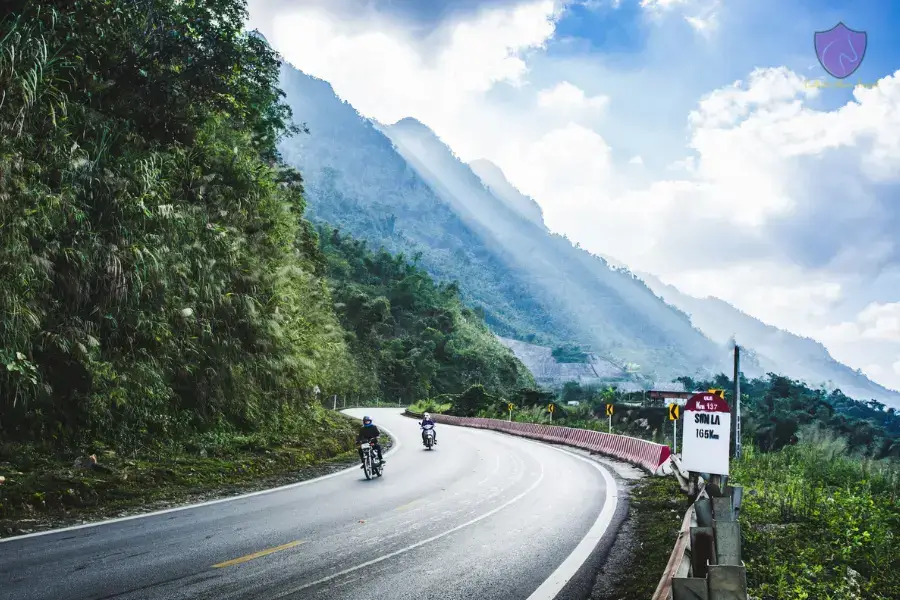
- Requirements: Excellent front/rear brakes, high-beam headlamps for fog, and a strong helmet. Avoid riding low-powered automatic scooters. Semi-automatic or manual bikes (125cc+) handle the sustained inclines far better.
Is Thung Khe Pass Safe for Tourists?
While QL6 is a modern, fully paved, multi-lane national highway, the stretch passing over Thung Khe Pass demands respect due to elevation, heavy cargo transport, and mountain weather.
Mountain Driving Essentials:
- HEADLIGHTS ON (Low beams in thick fog)
- GEAR DOWN (Engine brake downhill)
- PARK SAFELY (Inside white lines)
- NO CROSSING LINES (Blind hairpin curves)
Crucial Safety Rules for Drivers and Motorbikers:
- Beware of the “Blind Fog” Zone: Thung Khe is notorious for sudden, dense fog patches, especially between November and March. Turn on low-beam headlights or hazard lights immediately. Do not use high beams in fog, as the light reflects off the water droplets, blinding you further.
- Never Overtake on Hairpin Curves: Truck and container traffic moving between Hanoi and Son La use this pass continuously. Honk your horn before entering blind corners and never cross double yellow centerlines.
- Engine-Brake on the Descent: When descending from the pass toward Mai Chau, use lower gears (Gear 2 or 3 on manual/semi-automatic motorbikes) to let the engine control your speed. Overusing brake pads on a long descent can lead to total brake fade.
- Park Completely Off the Highway: When pulling over at the roadside stalls or viewpoint platforms, park fully inside designated gravel pull-outs. Avoid standing or taking photos on the narrow asphalt shoulder where oncoming traffic negotiates turns.
Best Time to Visit & Weather Insights
Because of its high-elevation saddle position on QL6, Thung Khe Pass weather experiences a microclimate that can shift rapidly within a single hour. Locals often joke that the pass sees “four seasons in a single day.”
Here is the detailed breakdown of its weather patterns:
| Season | Months | Weather & Visual Character | Local Travel Advice |
| Spring | Feb – Apr | Damp air, light spring drizzle (mưa xuân), heavy morning mist. | Ethereal, moody photography. Dress warmly and watch for slick tarmac. |
| Summer | May – Aug | Warm sunlight, high visibility, vivid blue skies against white rocks. | Best time for panoramic valley views. Occasional heavy afternoon downpours. |
| Autumn | Sep – Nov | Crisp air, comfortable temperatures, golden light over Mai Chau. | Ideal driving conditions; matches the golden rice harvest in Mai Chau Valley. |
| Winter | Dec – Jan | Chilly (drops below 10°C / 50°F), thick mountain fog, high wind chill. | Pack heavy windbreakers; fog can severely reduce highway visibility. |
Advice on Sunrise vs. Sunset Realities
- Thung Khe Pass Sunrise: Offers magical cloud inversion opportunities. Fog settles dense in the valley bottom while the pass breaks into warm, low-angled morning light.
- Thung Khe Pass Sunset: Early evening mist rolls in fast as ambient light drops. If riding a motorbike, aim to clear the mountain descent before full darkness sets in.
Things to Do at Thung Khe Pass
While you won’t need a full day here, planning an intentional 30- to 45-minute stop en route transforms a tedious drive into a highlight of your journey.
Sample Authentic Muong Street Food
The rustic wooden stalls lining the pass are run almost entirely by local Muong ethnic women from Tan Lac district. Resting beside a glowing charcoal grill in the chilly mountain air is an essential northern road-trip tradition.
- Cơm Lam (Bamboo-tube Sticky Rice): Glutinous rice infused with coconut milk, packed inside fresh bamboo tubes, and roasted over embers. Peel back the charred bamboo skin and dip the fragrant rice into salted crushed peanuts (muối vừng).
- Mía Tím Nướng (Grilled Purple Sugarcane): Local purple sugarcane stalks roasted whole on the coals. Heating softens the fibers and caramelizes the natural sugars, making it warm, juicy, and intensely sweet.
- Thịt Lợn Mán Nướng (Grilled Wild Pork Skewers): Free-roam hill-tribe pork marinated with wild pepper (hạt dổi), lemongrass, and honey, grilled on bamboo skewers over open flames.
- Trừng Nướng & Ngô Nướng: Charcoal-grilled eggs and sweet corn sprinkled with chili salt.
- Chè Đắng (Wild Bitter Tea): A hot herbal tea brewed from native forest leaves. It’s initially bitter on the tongue, leaving a sweet, soothing aftertaste in the throat.
Photograph the Snowy Limestone Landscape
The stark white rock faces offer a surreal backdrop, especially when framed against contrast-heavy blue skies or dramatic morning fog.
Pro Photography Tip: White limestone reflects heavy UV rays. If you are shooting with a mirrorless/DSLR camera or smartphone under direct sunlight, drop your exposure down by -0.7 EV or use a circular polarizing filter (CPL) to prevent blown-out highlights on the rocks and keep the sky rich and blue.
Take in the Mai Chau Flagpole Viewpoint
Pull over safely at the Mai Chau Flagpole parking bay. On a clear day, bring a zoom lens or binoculars to spot Lac Village (Bản Lạc) and Pom Coong Village nestled among the mountain shadows, surrounded by vast green or golden rice terraces (depending on the season).
2-Day Hanoi to Mai Chau Itinerary via Thung Khe Pass
Integrating a stop at White Rock Pass into a broader trip is seamless. Here is how to structure a smooth, scenic weekend escape.
Day 1: Hanoi → Thung Khe Pass → Mai Chau Valley
- 07:30 AM: Depart Hanoi via QL6 to beat the morning city traffic.
- 10:30 AM: Begin the scenic mountain climb through Hoa Binh.
- 11:15 AM: Arrive at Thung Khe Pass. Park at the market stalls, stretch your legs, and photograph the white limestone cliffs. Enjoy warm cơm lam, grilled wild pork skewers, and hot tea while chatting with the local Muong vendors.
- 12:00 PM: Drive 5 minutes further down QL6 to pull over at the Mai Chau Flagpole for a bird’s-eye view of the entire valley floor.
- 12:45 PM: Descend into Mai Chau Valley. Check into your traditional stilt house in Lac Village (Bản Lạc) or Pom Coong Village. Enjoy a home-cooked lunch prepared by a Thai host family.
- 03:00 PM: Rent a bicycle to ride through flat, peaceful rice fields and surrounding villages.

Day 2: Mai Chau Exploration → Return to Hanoi
- 06:00 AM: Enjoy early morning fresh air over the fields; watch local farmers tend to their crops.
- 08:30 AM: Visit Chợ Phố Đoàn or explore Mo Luong Cave (Hang Mỏ Luông).
- 12:00 PM: Check out and enjoy lunch in town.
- 02:00 PM: Begin the return journey toward Hanoi, enjoying a second afternoon look at the pass under different lighting conditions.
- 05:30 PM: Arrive back in Hanoi.
FAQ
How far is Thung Khe Pass from Hanoi and Mai Chau?
Thung Khe Pass is approximately 120 km southwest of Hanoi (around 3 to 3.5 hours drive) and 18 km before Mai Chau town (around 20 to 25 minutes downhill drive along Highway QL6).
Is there an entrance fee to visit Thung Khe Pass?
No, accessing Thung Khe Pass, the roadside market area, and the Mai Chau Flagpole is 100% free. You only pay a small fee (around 10,000 to 20,000 VND) if you use private parking lots or purchase food and souvenirs from the vendor stalls.
Are there clean restroom facilities at the pass?
Basic, rustic restrooms are available behind the roadside wooden food stalls. While operational, they are simple hill-tribe pit-style toilets. For higher-standard modern restrooms, stop at larger highway gas stations near the base of the mountain in Tan Lac or wait until arriving at your hotel in Mai Chau.
Can you visit Thung Khe on a day trip from Hanoi?
Yes, but it involves roughly 7 hours of total driving time. It is far more rewarding to combine the pass with an overnight stay in Mai Chau or Pu Luong Nature Reserve.
What should I wear when visiting Thung Khe Pass?
Because of its 1,000-meter elevation, temperatures at the pass are typically 4°C to 8°C cooler than in Hanoi or Mai Chau. Always carry a lightweight windbreaker or warm layer, even during summer, and pack a sturdy pair of shoes with decent grip if walking along the limestone rocks.
Final Thoughts
Thung Khe Pass represents the essence of northern travel: the journey itself is just as captivating as the destination. It is a place where industrial accident, wild geography, and hill-tribe hospitality collide to create something genuinely unforgettable.
When you pull over at White Rock Pass, don’t rush through just to snag a quick selfie and leave. Take twenty minutes to sit under a thatched roof, breathe in the cool mountain air, listen to the crackle of bamboo over charcoal, and share a hot tube of cơm lam with the local Muong vendors. That short, atmospheric pause will stay with you long after you’ve descended into the green quiet of Mai Chau.
We wish you safe travels on National Highway 6 through the amazing mountain roads. Thank you for reading this and taking the time to explore Vietnam with depth and respect!