
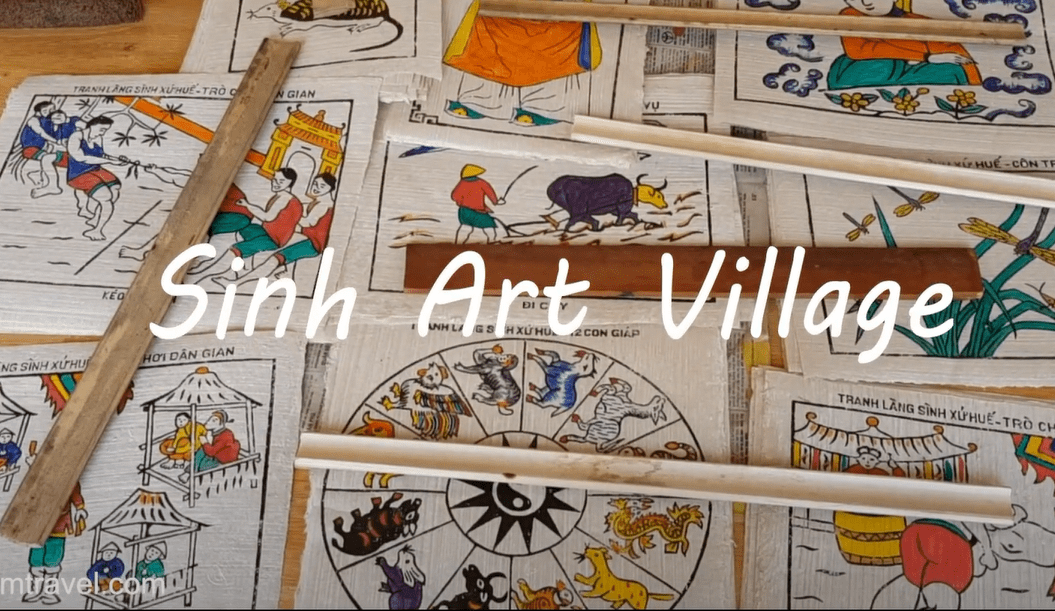
Sinh folk painting village overview
Sinh Folk Painting Village is a traditional craft village located in the peaceful countryside of Hue. It is well known for its unique woodblock prints that reflect local beliefs and daily life. Unlike many other folk paintings in Vietnam, Sinh paintings are closely connected to spiritual practices and rituals.
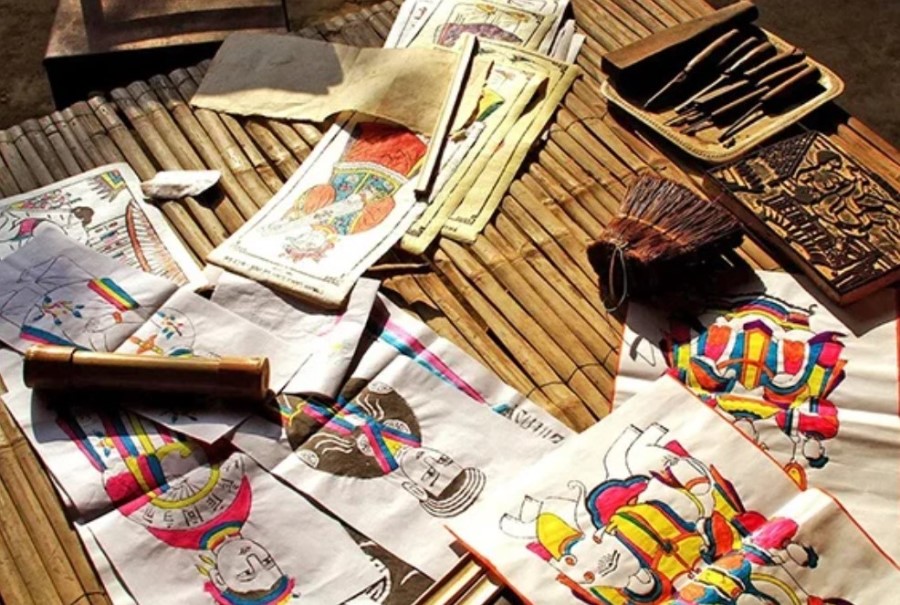
The village has a long history and remains an important part of Hue’s cultural heritage. Visitors can explore small family workshops and see how each painting is carefully made by hand. The simple yet colorful designs create a rustic and meaningful artistic style.
Today, Sinh Village offers travelers a chance to experience authentic local culture while learning about one of Vietnam’s oldest traditional art forms.
Where is the Sinh Painting Village?
Sinh village is called Lai An village, an early-formed village in central Vietnam. Sinh village of Hue is located on the banks of the poetic Huong River; on the other side of the river is the famous Thanh Ha river port during the reign of the Nguyen kings, also known as Pho Lo. Besides, there is Bao Vinh old town, one of the busiest shopping centers under the Nguyen Dynasty.
Nowadays, Sinh village is known as a cultural village, where it still preserves the folk painting profession and the famous Sinh village wrestling.
Right from its inception, the paintings of Sinh village were no longer purely to serve as elegant paintings, but also to meet religious needs. Pictures of Sinh village Hue, are also used by people to worship and transform during the ceremony to pray for peace and relief.
Origin of Sinh Folk Paintings
Lai An Village is one of the oldest villages in Dang Trong. It lies along the Perfume River, facing Thanh Ha on the opposite side, which was once a busy trading port during the time of the Nguyen Lords, also known as Pho Lo. Later, Bao Vinh developed nearby and became a lively commercial area close to Hue. The village was also an important cultural place, home to Sung Hoa Pagoda, once one of the largest pagodas in the old Hoa Chau region.
Today, Lai An Village is better known as Sinh Village, a place rich in culture and tradition. It is famous not only for its folk paintings but also for its traditional wrestling festival, held every year on the 10th day of the first lunar month. As locals often say, “Wherever you go, remember to return to Sinh for the wrestling festival.”
The village is also known for making incense and popped rice used in worship. Because of these strong spiritual traditions, Sinh paintings were not created just for decoration. Instead, they were mainly used for worship and rituals, such as praying for peace, protection, and good fortune.
Sinh folk paintings were born from daily life and local beliefs. Their materials, colors, themes, and simple lines all reflect the community’s spiritual culture. Each painting carries its own meaning, making this art form both unique and meaningful.
According to local stories, during the Trinh–Nguyen period, a man named Ky Huu Hoa brought the woodblock printing craft to this area when he settled in Thuan Hoa. From that time, Sinh paintings began to develop. Hue, with its many traditional rituals such as ancestor worship, memorial ceremonies, and spiritual offerings, created the perfect environment for this art to grow.
The craft started when Hue’s main administrative center was still in Hoa Thanh. Not long after, Sinh folk painting became a well-known and important traditional craft in the region.
About the artisan Ky Huu Phuoc
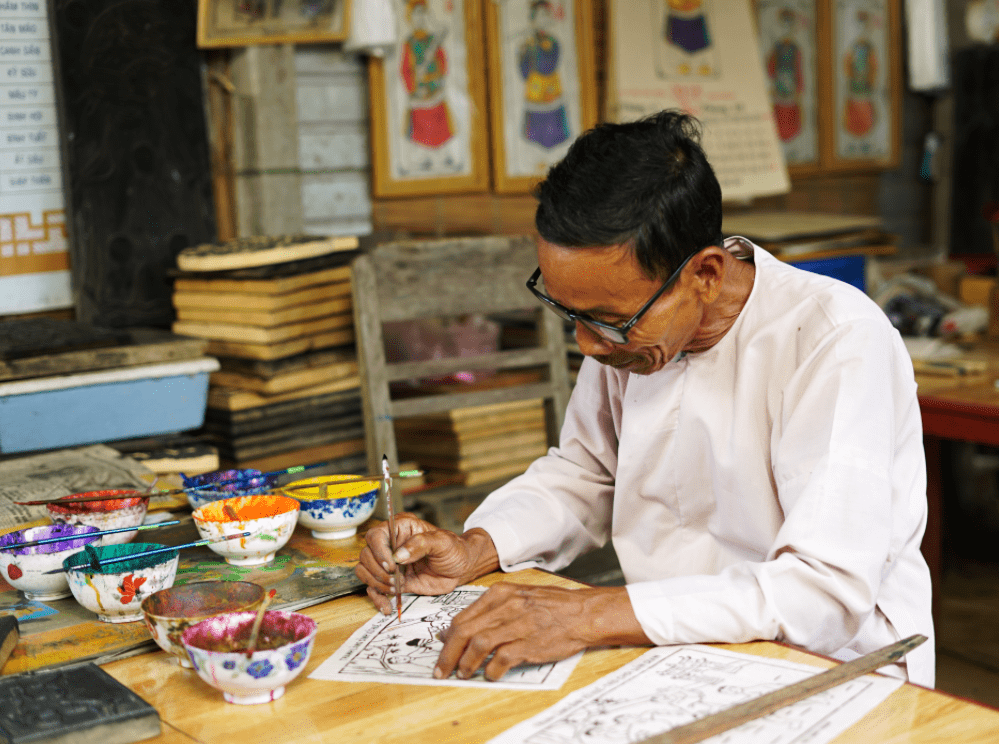
Artisan Ky Huu Phuoc is the most well-known craftsman in Sinh Folk Painting Village and is often seen as the key person who helped preserve this traditional art. He was born into a family with a long history of making folk paintings and learned the craft from a young age. When the tradition nearly disappeared, he became the only artisan who still fully understood the original techniques.
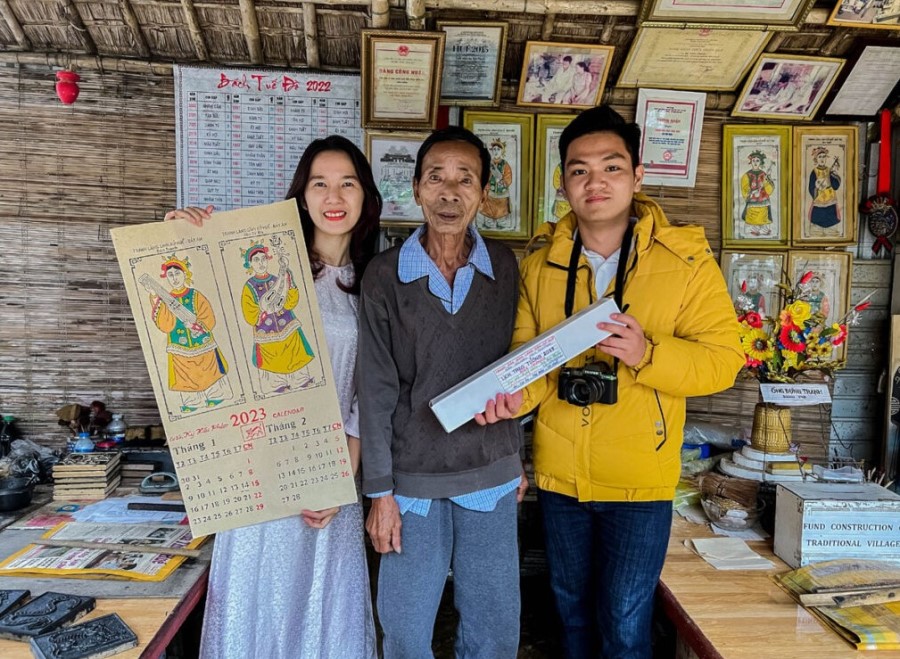
With strong dedication, he worked hard to revive the craft by recreating lost woodblocks and teaching others in the village. He also welcomed visitors to his workshop, sharing stories and demonstrating the traditional printing process. His efforts helped bring Sinh paintings back to life and gain recognition again.
Today, Ky Huu Phuoc is famous not only for his skills but also for his role in protecting and promoting the cultural heritage of Sinh Village.
How to explore this cultural village?
To explore the Sinh folk painting village and other Hue highlights, you can book the Hue City Tour Full Day, Hue City Tour by private car, Hue cycling tour, Bach Ma National Park Tour, and Hue Street Food Tour via Culture Pham Travel. We are always willing to customize the tours following your request! Your happiness is our success.
After a lovely stay in Hue, you may need our Hue private car transfers to other destinations such as
- Hue to Hoi An by private car– from 69 USD/ Sedan.
- Hue to Da Nang by private car– from 65 USD/ Sedan.
- Hue to Dong Hoi private car– from 87 USD/ Sedan.
- Hue to Phong Nha by private car– from 99 USD/ sedan.
What makes the paintings of Sinh Village unique?
According to the artisan, Ky Huu Phuoc, Sinh village paintings have existed for more than 400 years. However, over time, the tradition of making paintings has also been somewhat eroded. But the woodblocks used to print paintings passed down for many years have been lost after the war, and it is difficult to find the old woodblocks.
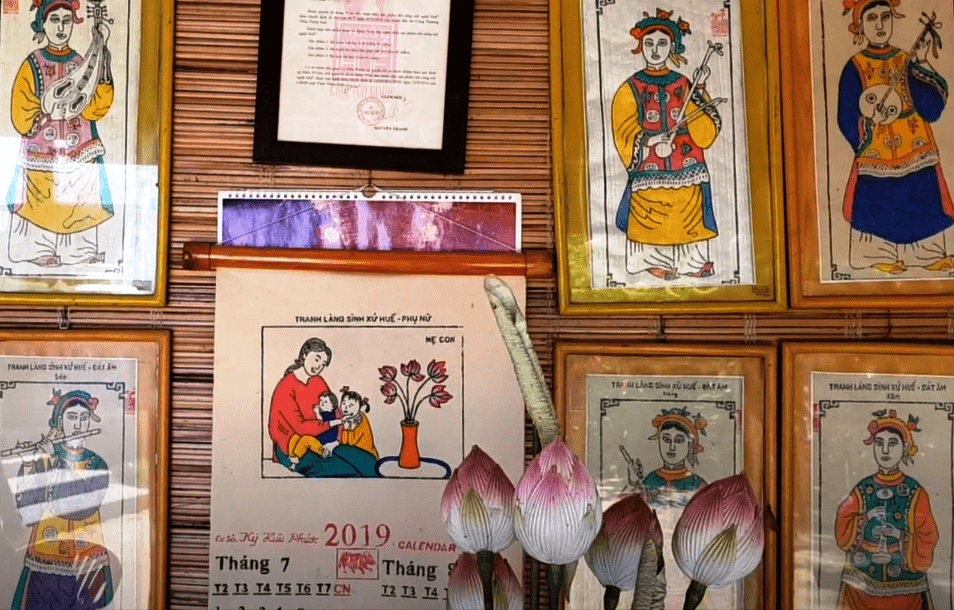
The line of paintings in the Sinh village of Hue is divided into 3 main categories:
Worshiped paintings: usually depicted a woman wearing a sodom with two servants standing on either side or the kitchen god in a colorful costume.
Object paintings in Sinh village often draw clothes, money, and tools for the underworld people, such as clothes, money, …
The animal’s paintings are similar to the other 2 types, drawings of poultry, elephants, and 12 zodiac animals to burn for people in the underworld.
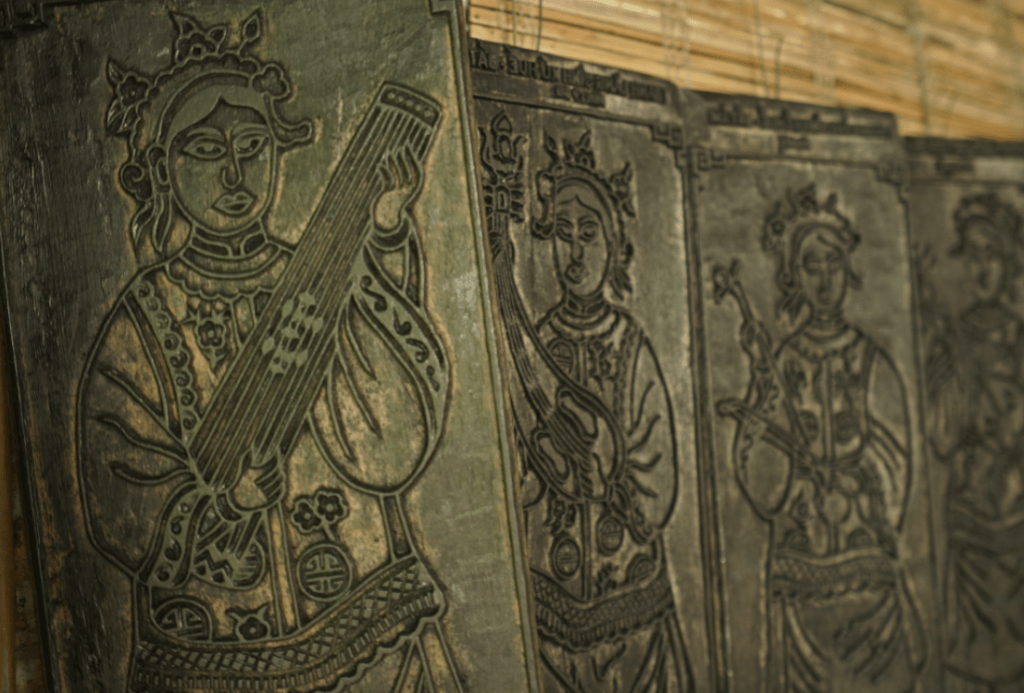
Materials for making paintings are mainly made entirely from nature, so the characteristics of Sinh village paintings are still handcrafted. The woodblocks are made from jackfruit wood. The paper was taken from Quang Ninh province. After regrouping, they will paint a layer of mother-of-pearl to keep the color and improve the quality of the paper.
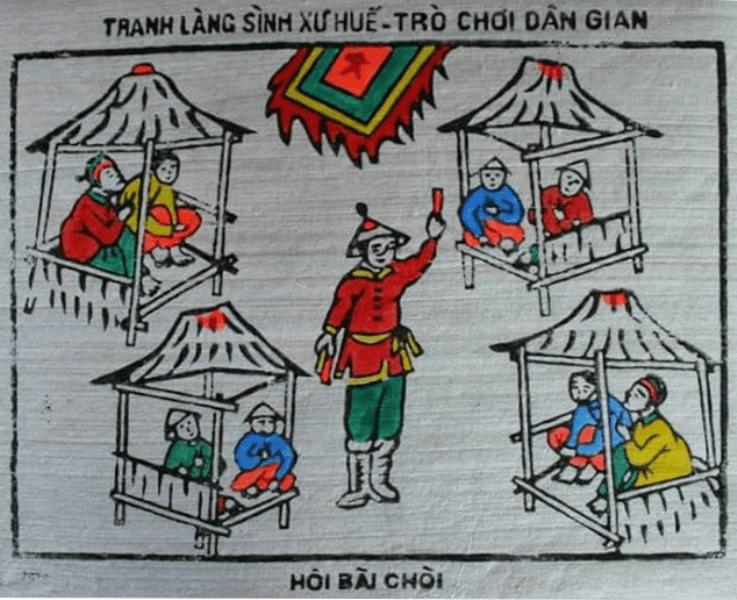
The color of the painting is somewhat similar to that of Dong Ho village, also made from natural ingredients such as red from almond leaf juice; black from straw ash, leaf ash, purple from vegetable spinach seeds, mixed with buffalo skin to create glue as raw materials.
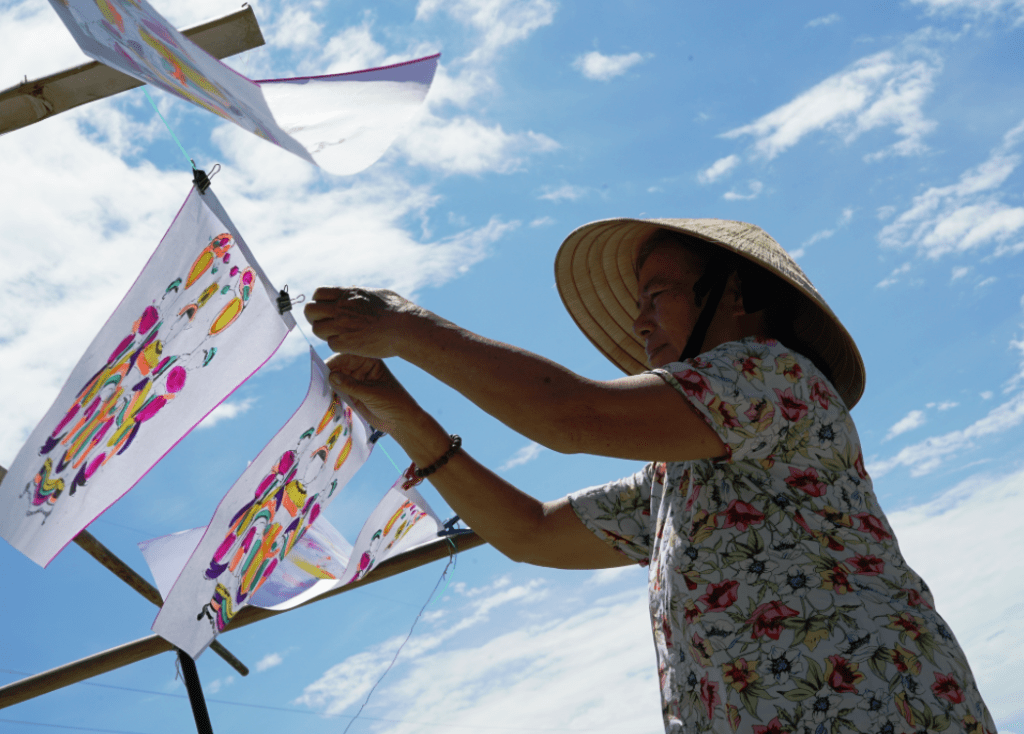
The paintings of Sinh Hue village are only printed with a black version first, so the works created always have a distinctive character. In order to create the masterpieces, the artist needs to be whole-minded and whole-hearted during the drawing process.
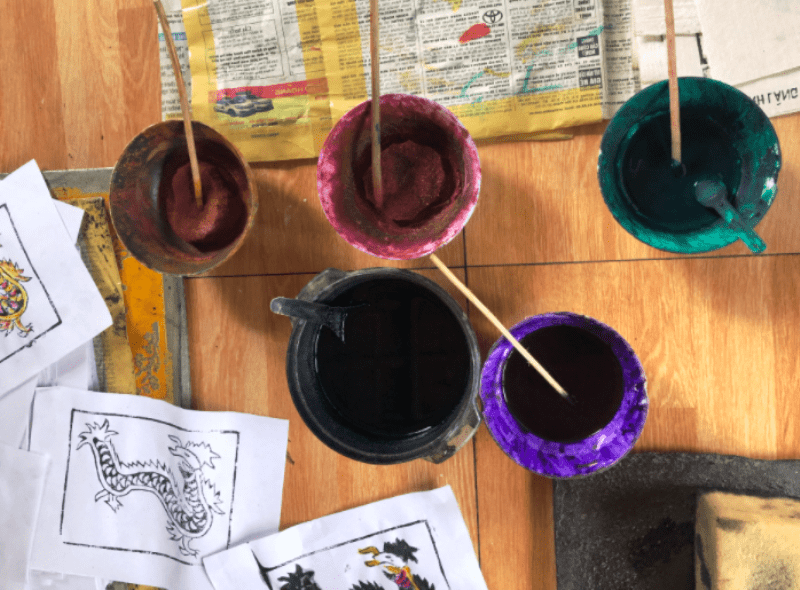
In 2007, Sinh village folk paintings were honored as a cultural heritage of the nation that should be preserved and protected. Recently, the handicraft village tourism service has been increasingly developing, creating conditions for these folk paintings to regain an important position in the national cultural life.
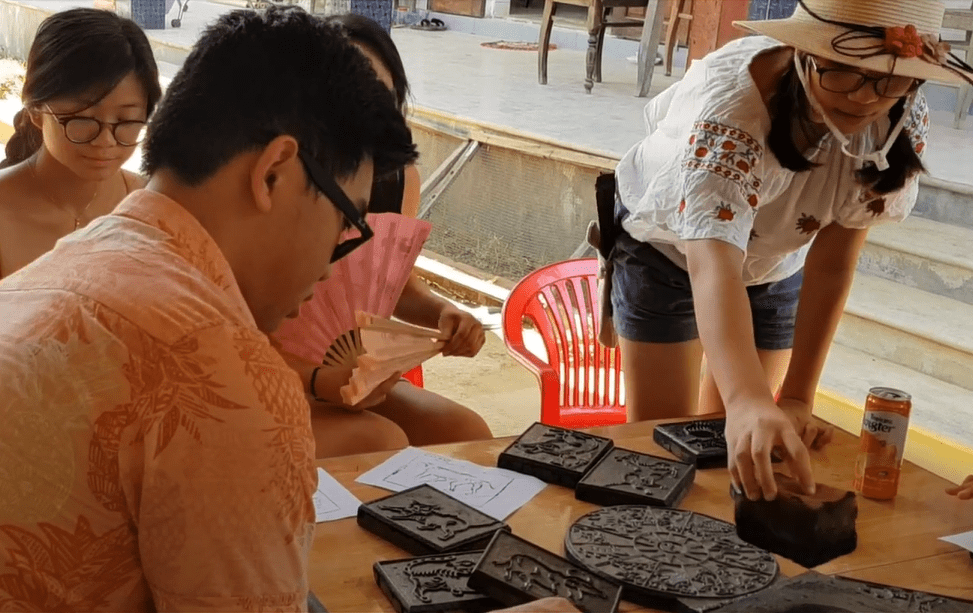
In particular, the village of Sinh has become a famous tourist destination in Hue, attracting a large number of tourists to visit and learn about the folk culture of the nation.
Sinh Folk Painting vs Dong Ho Painting Village
Origin and Cultural Context
Sinh Folk Painting (Hue) originates from Lai An Village in Central Vietnam and is deeply connected to spiritual life and ritual practices. It developed in a region rich in royal and folk beliefs, especially around Hue’s imperial culture.
Dong Ho Painting (Bac Ninh) comes from Northern Vietnam, particularly Kinh Bac, and reflects agricultural life, social values, and festive traditions. It is more widely known and has become a symbol of Vietnamese folk art.
Purpose and Usage
Sinh Paintings are mainly created for worship and spiritual rituals. Many are burned after ceremonies, as they are believed to carry prayers for peace, protection, and good fortune.
Dong Ho Paintings are primarily decorative and educational. They are often displayed during Lunar New Year (Tet) to bring joy, luck, and moral messages into the home.
Themes and Subjects
Sinh Village focuses on spiritual figures, deities, ritual objects, and symbolic animals linked to beliefs and protection. Human figures often represent guardians or substitute offerings.
Dong Ho Village features lively everyday scenes such as farming, festivals, folk games, and humorous stories. Popular themes include “The Rat’s Wedding” or images symbolizing prosperity and happiness.
Artistic Style and Colors
Sinh Paintings use bold, simple lines with strong, contrasting colors like red, yellow, green, and black. The colors are applied freely by hand, giving each piece a slightly different and expressive look.
Dong Ho Paintings are more refined and balanced in composition. Colors are also natural but carefully arranged to create harmony and visual storytelling.
Materials and Techniques
Both traditions use woodblock printing, but with different finishing methods:
Sinh Village: Prints outlines first, then hand-colors each painting individually. Paper is coated with shell powder for durability and shine.
Dong Ho Village: Uses multiple woodblocks to print each color layer separately, creating a more uniform and repeatable result.
Cultural Value and Preservation
Sinh Folk Painting was once at risk of disappearing, but is now being revived thanks to cultural preservation efforts and tourism. It remains closely tied to spiritual life in Hue.
Dong Ho Painting has gained national and international recognition and is considered a cultural icon of Vietnam. It has a stronger commercial presence but still faces challenges in maintaining traditional methods.
Visitor Experience
At Sinh Village, visitors enjoy a quiet, authentic setting where they can learn about spiritual traditions and even try printing paintings themselves.
At Dong Ho Village, travelers experience a more established craft destination with exhibitions, workshops, and a wider variety of artworks for display and purchase.
Conclusion
While both Sinh and Dong Ho paintings share the same woodblock printing roots, they differ greatly in purpose, style, and cultural meaning. Sinh paintings reflect the spiritual depth of Central Vietnam, while Dong Ho paintings capture the lively spirit of Northern village life, together showcasing the rich diversity of Vietnamese folk art.
Useful Travel Tips
Best Time to Visit Sinh Village
The best time to visit Sinh Folk Painting Village is during the dry season, from March to August, when the weather is sunny and perfect for exploring the countryside. During these months, the roads are easy to travel, and you can enjoy the peaceful rural scenery around the village.
For a more cultural experience, try to visit before the Lunar New Year (Tet). This is when local artisans are busiest making paintings for traditional rituals, and the village becomes more lively and colorful. It’s a great time to see the craft in its most authentic and vibrant setting.
Entrance Fee and Opening Hours
Sinh Folk Painting Village is open to visitors throughout the day, and there is usually no official entrance fee. However, a small contribution of around 2 USD per person (about 60,000 VND) or buying a painting is a nice way to support the local artisans.
Visitors are welcome to take photos, record videos, and even try making or coloring the paintings themselves. For the best experience, it’s recommended to visit in the morning or early afternoon, when artisans are actively working and happy to interact with guests.
Why You Should Visit Sinh Folk Painting Village
Sinh Folk Painting Village offers a rare opportunity to connect with Hue’s authentic cultural heritage. Unlike more commercialized attractions, the village retains its traditional charm and provides a genuine glimpse into local life.
For travelers seeking meaningful experiences, artistic inspiration, and cultural depth, Sinh Village is truly a hidden gem worth discovering during your journey in Hue.
Pingback: Hue Traditional Craft Villages - Culture Pham Travel