
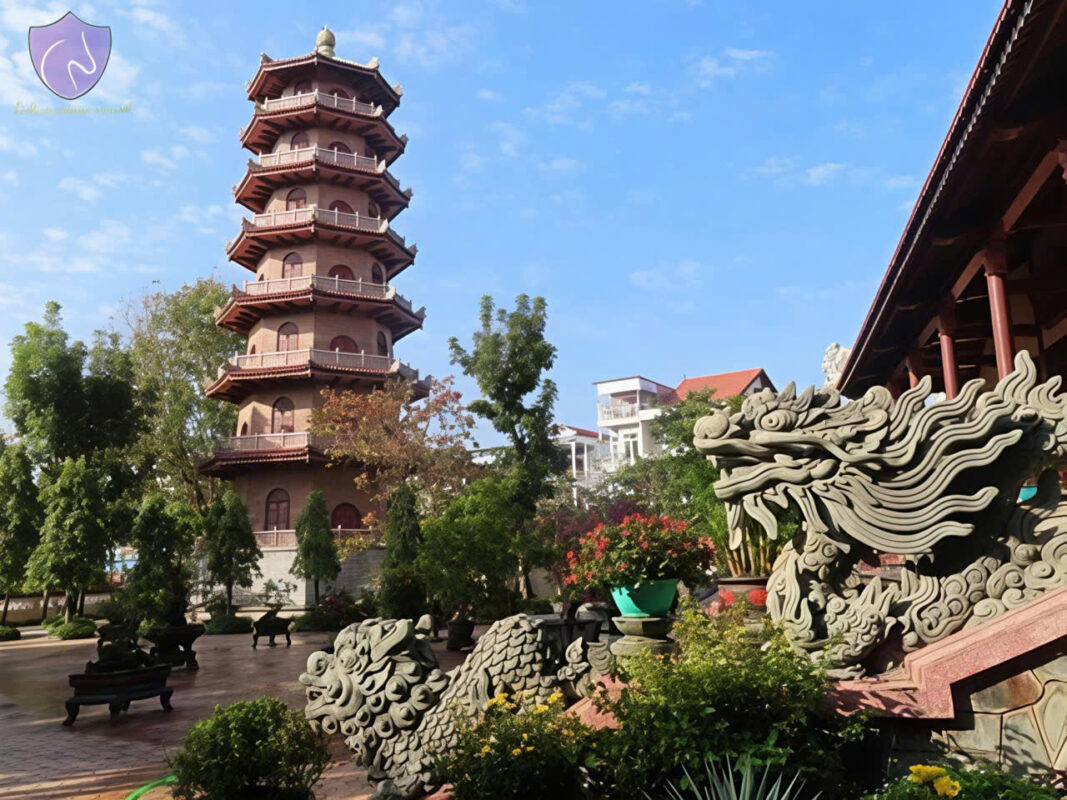
Tu Dam Pagoda Introduction
Tu Dam Pagoda is one of the most important spiritual and cultural landmarks in Hue. With a history dating back to the 17th century, the pagoda reflects a harmonious blend of traditional Vietnamese architecture and peaceful natural surroundings. Its simple yet dignified design, shaded courtyards, and quiet atmosphere create an ideal space for reflection and spiritual practice.
Tu Dam Pagoda Hue History
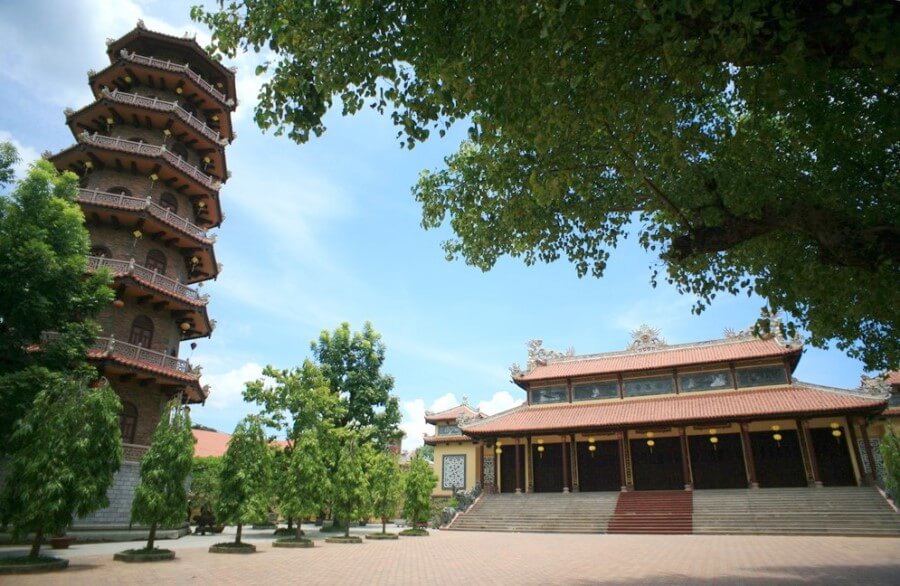
The history of Tu Dam Pagoda reflects the broader development of Vietnamese Buddhism over more than three centuries. The pagoda was originally established in the late 17th century (around 1690) by the Chinese Zen master Minh Hoang – Tu Dung under the name An Ton, during the time of the Nguyen Lords. In 1703, Lord Nguyen Phuc Chu officially recognized it with the royal title “Sac Tu An Ton Tu.” Later, in 1841, Emperor Thieu Tri renamed it “Tu Dam Pagoda,” meaning “Auspicious Cloud,” symbolizing purity and enlightenment in Buddhism.
Entering the early 20th century, Tu Dam Pagoda rose to prominence as a major Buddhist center in Hue and across Vietnam. It became closely associated with the Buddhist revival movement from 1930 to 1945, which aimed to restore traditional values and strengthen Buddhist education and organization nationwide. From 1932, the pagoda served as the headquarters of the An Nam Buddhist Association and was expanded into a large complex for religious activities, teachings, and community gatherings.
Tu Dam Pagoda also played a vital role in key historical events of modern Vietnamese Buddhism. It contributed to the unification of Buddhist organizations across the three regions of Vietnam in 1951. In 1963, the pagoda became a focal point of peaceful protests against religious discrimination under the regime of Ngo Dinh Diem. Later, in 1981, it continued its importance by serving as one of the centers promoting the nationwide unification of Vietnamese Buddhism.
Today, Tu Dam Pagoda stands not only as an ancient religious site but also as a powerful historical symbol. Its legacy embodies resilience, spiritual devotion, and the continuous effort to preserve and develop Vietnamese Buddhism, making it a meaningful destination for visitors seeking both cultural understanding and historical insight.
Tu Dam Pagoda Location & How to get there?
Tu Dam Pagoda is located at 1 Su Lieu Quan Street, Truong An Ward, in Hue. The pagoda sits on a gentle hill and faces southeast, offering a calm and airy setting. Nearby, visitors can also find Linh Quang Pagoda and Phan Boi Chau Temple, which add to the cultural richness of the area.
Just about 2 kilometers from the city center, Tu Dam Pagoda is easy to reach. Visitors can conveniently get there by motorbike, bicycle, taxi, or even enjoy a short walk while exploring the peaceful surroundings of Hue.
- You may be interested in our Hue Buddhist Tour, Hue Royal Tombs Tour, and Hue City Group Tour
The architecture of Tu Dam Pagoda
The pagoda is designed in traditional Vietnamese style, seamlessly integrated with its natural surroundings. A spacious courtyard, shaded by ancient trees, creates a cool and serene atmosphere. The layout is simple yet well-balanced, reflecting core Buddhist principles of harmony, mindfulness, and inner peace.
The Three Door Gate
The three-door gate serves as the symbolic entrance to the sacred space. Its three passages represent different spiritual paths in Buddhism.
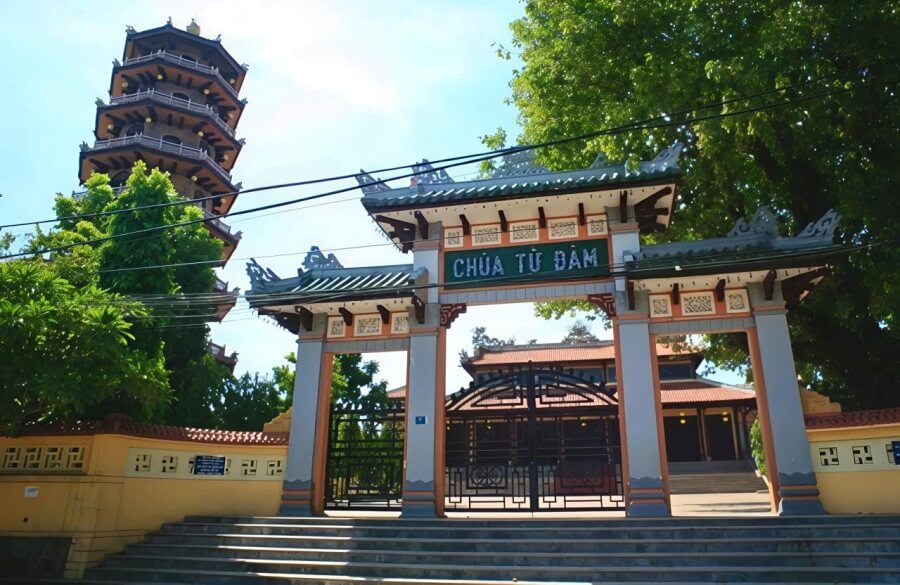
The architecture is elegant and understated, setting a respectful tone as visitors enter the pagoda grounds. The gate of the Tu Dam pagoda is high and wide with an elegant tile roof.
The Main Hall
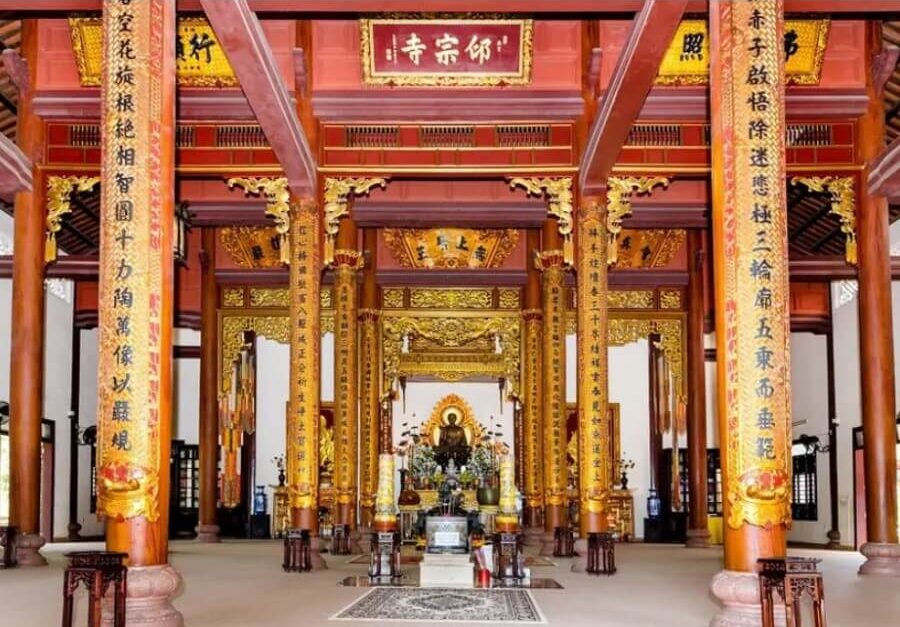
In terms of architecture, Tu Dam Pagoda is characterized by simplicity and a focus on spiritual function rather than elaborate decoration. The main hall is arranged with quiet solemnity, featuring a statue of Shakyamuni Buddha seated on a lotus pedestal, flanked by the bodhisattvas Samantabhadra and Manjushri.
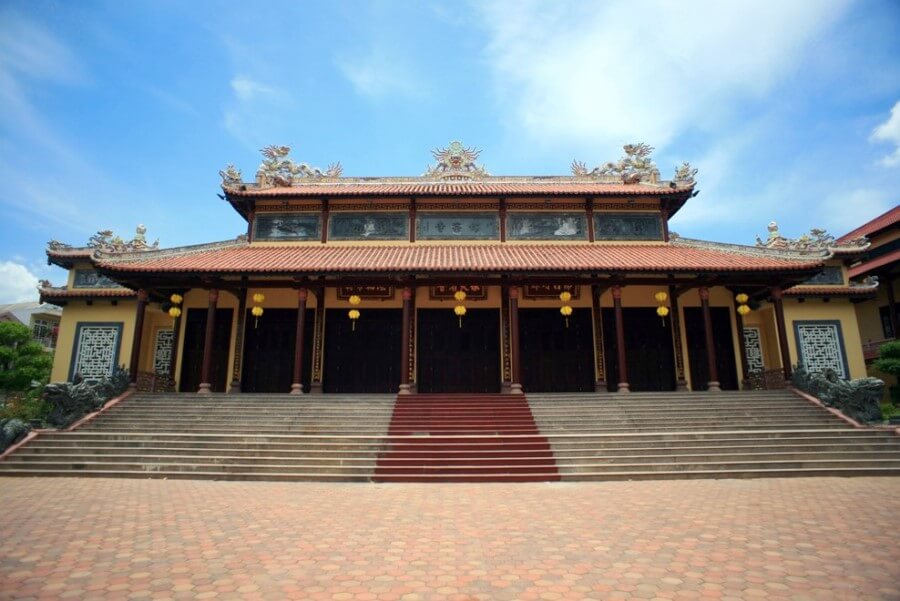
To the right of the main hall are the guesthouse and the living quarters for monks and nuns. In front of the guesthouse, a small garden provides a peaceful space, where visitors can see a bust of the respected layman and physician Le Dinh Tham, who made important contributions to Vietnamese Buddhism.
The Ancient Bodhi Tree
Behind the gate stands a sacred Bodhi tree, whose lineage traces back to the original tree in India where Shakyamuni Buddha attained enlightenment. A sapling of this tree was later brought from Sri Lanka and presented to the local Buddhist association, then planted here in the late 1930s.

Over time, the Bodhi tree has grown tall and expansive, with a trunk so large that several people cannot fully embrace it. Its wide canopy provides cool shade across the courtyard, while also symbolizing spiritual growth, resilience, and the enduring vitality of Buddhism.
The An Ton Tower
The An Ton Tower at Tu Dam Pagoda is one of the most striking architectural features of the pagoda. Located near the entrance, it stands at about 27.5 meters tall with an octagonal design. The tower has seven levels, each enshrining a bronze Buddha statue, symbolizing spiritual elevation.

Its structure gradually narrows toward the top, creating a graceful and harmonious silhouette. Completed in 2010, An Ton Tower adds both cultural depth and visual appeal to the pagoda complex.
What to Do at Tu Dam Pagoda
Visiting Tu Dam Pagoda is less about ticking off attractions and more about experiencing a peaceful and meaningful atmosphere. Here are some enriching activities to enjoy during your visit:
Soak in the Tranquil Atmosphere
Take time to walk slowly through the shaded courtyard, where ancient trees and quiet pathways create a calm, reflective setting. The gentle sounds of nature and distant chanting help you disconnect from the busy pace of daily life.
Explore the Architecture
Admire the pagoda’s traditional Vietnamese design, from the elegant triple gate to the simple yet dignified main hall. Don’t miss the An Ton Tower, whose octagonal, multi-tiered structure stands out as a unique architectural highlight.
Visit the Main Sanctuary
Step inside the main hall to observe the statue of Shakyamuni Buddha seated on a lotus pedestal, accompanied by bodhisattvas. The quiet, incense-filled space offers a deeply spiritual and respectful environment.
Learn About Buddhist History
Tu Dam Pagoda is closely linked to important milestones in Vietnamese Buddhism. As you explore, you can gain insight into its role in the Buddhist revival movement and its historical significance in Hue.
Observe Daily Monastic Life
If you visit at the right time, you may see monks and nuns going about their daily routines, chanting, or preparing for ceremonies. This offers a rare and authentic glimpse into Buddhist practice.
Take Respectful Photographs
The pagoda provides many beautiful photo opportunities, from its peaceful gardens to its traditional structures. Be mindful to keep a respectful distance, especially inside sacred spaces, and avoid disturbing worshippers.
Reflect and Find Inner Peace
Whether you sit quietly in the courtyard or join a moment of prayer, Tu Dam Pagoda is an ideal place to pause, reflect, and reconnect with a sense of inner calm. A visit here is not just about sightseeing; it is a chance to experience the spiritual heart of Hue in a gentle and meaningful way.
Travel Tips for Visiting Tu Dam Pagoda
A visit to Tu Dam Pagoda can be both peaceful and insightful if you plan it well. Here are practical, detailed tips to help you make the most of your experience in Hue
Choose the Right Time to Visit
Early morning (6:00–8:00 AM) and late afternoon (after 4:00 PM) are the best times to visit. The weather is cooler, the light is softer for photography, and the pagoda is quieter, allowing you to fully enjoy its spiritual atmosphere. Midday can be hot, especially during Hue’s summer months.
Dress Respectfully
As a religious site, modest clothing is essential.
- Wear shirts that cover the shoulders
- Avoid short skirts or shorts above the knee
- Comfortable, lightweight clothing is recommended due to the warm climate
This not only shows respect but also ensures a more comfortable visit.
Mind Your Behavior Inside the Pagoda
- Speak softly and avoid loud conversations
- Remove hats when entering sacred areas
- Do not touch statues or religious objects
- Ask permission before photographing monks
Maintaining respectful behavior helps preserve the sacred environment.
Stay Hydrated and Prepared
Hue’s weather can be hot and humid, so bring:
- A bottle of water
- Sunscreen and a hat (for outdoor areas)
- Comfortable walking shoes
Even though the pagoda is shaded, you’ll likely walk between multiple attractions.
Photography Tips
- Morning light creates a soft, peaceful mood
- Capture the contrast between architecture and greenery
- Respect restricted areas (especially inside the main hall)
- Avoid using flash in sacred spaces
Keep the Environment Clean
- Do not litter
- Follow local guidelines
- Respect the quiet, natural setting
Preserving the environment ensures that the pagoda remains a peaceful retreat for future visitors.
Famous Nearby Attractions
Tu Dam Pagoda is located close to several cultural highlights, making it ideal for a half-day or full-day itinerary:
- Tu Hieu Pagoda: A peaceful pagoda set in a pine forest, known for its connection to Zen master Thich Nhat Hanh and its deeply meditative atmosphere.
- Thuy Xuan Incense Village: A colorful craft village where you can learn about traditional incense-making and take vibrant photos.
- Tu Duc Tomb: One of the most beautiful royal tombs, featuring poetic landscapes, lakes, and elegant architecture.
- Vong Canh Hill: A scenic viewpoint offering panoramic views of the Perfume River, especially stunning at sunset.
👉 Suggested route: Tu Dam Pagoda → Thuy Xuan Incense Village → Tu Duc Tomb → Vong Canh Hill
To have a fully satisfying experience, let’s book a Hue City Private Tour or Hue Private Car Tour via Culture Pham Travel.
Pingback: TOP 4 MOST BEAUTIFUL PAGODAS IN HUE - Culture Pham Travel
Pingback: TOP 4 MOST BEAUTIFUL PAGODAS IN HUE CITY - Culture Pham Travel
Pingback: Tu Hieu Pagoda Hue - Culture Pham Travel