
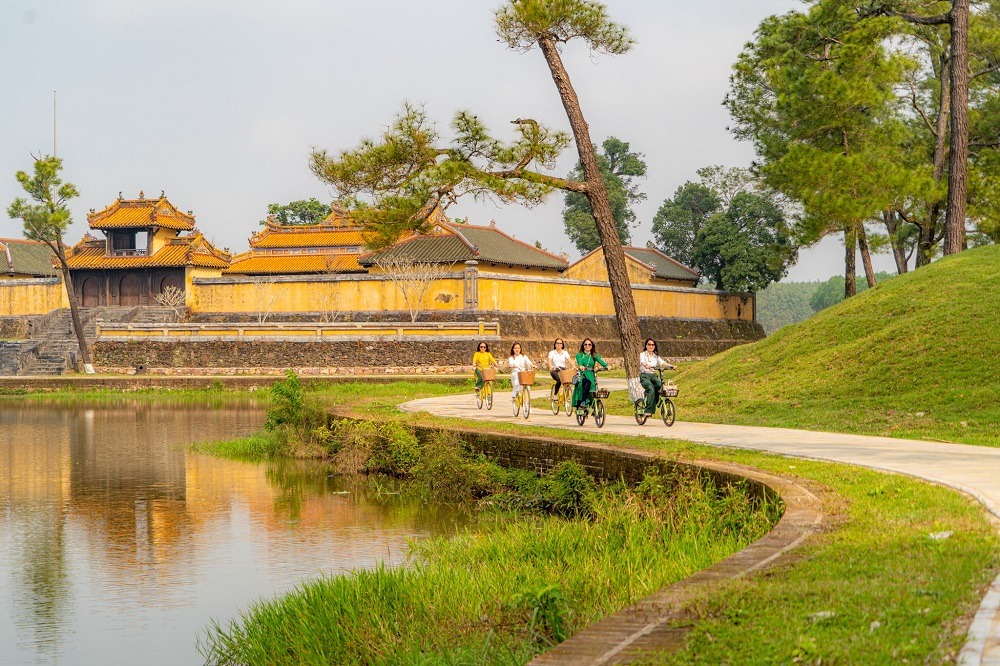
Gia Long Tomb Overview
Gia Long Tomb is the final resting place of the founder of the Nguyen Dynasty, the last imperial dynasty in Vietnam (1802- 1945). Unlike other Hue royal tombs that showcase elaborate architecture and decorative details, this tomb stands out for its simplicity and deep connection with nature. It offers visitors a unique experience, where history blends harmoniously with a vast and tranquil landscape.
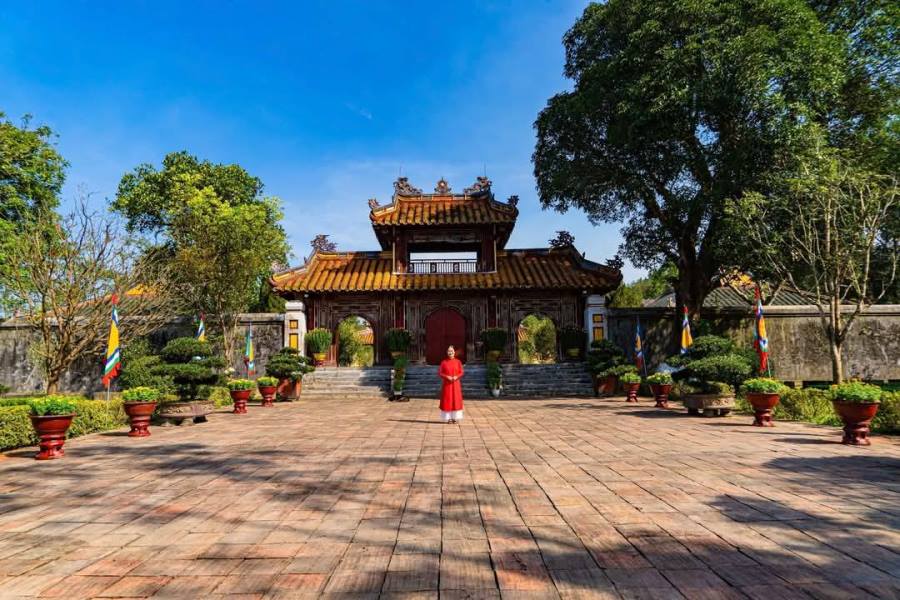
The tomb of the Gia Long Emperor lies at the top of Thien Tho Mountain, on the Perfume River’s west bank, 20 kilometers away from the heart of Hue City. In fact, Gia Long Tomb is a complex including numerous tombs of Emperor Gia Long, his mother, his wives, and other royal family members. Nowadays, the tomb is recognized as one of the UNESCO World Heritage.
Gia Long Tomb Location
The Gia Long Tomb location is in Huong Ho Commune, Kim Long, Hue City, Vietnam, which is 20 kilometers away from the city. It nestled beautifully on the greatest mountain in the area, called Thien Tho Mountain. It offers perfect surroundings for an emperor to rest forever.
The Gia Long Royal Tomb Map:
There are various ways to get to the Gia Long Tomb. The most unique one is to take a dragon boat and go along the Perfume River (known as the Huong River). The tomb is pretty far, so it takes around two hours to get there by boat.
Apart from a boat trip, you can ride a bike or motorcycle, hire private cars, Grab bikes, or taxis. Yet, visitors unfamiliar with the routes should have local drivers/riders take them there instead of going on their own. The tomb is quite far away from the city center.
Moreover, the best recommendations are our Hue tours with excellent private car transfers, well-informed tour guides, and intriguing attractions in Hue. See them as follows:
- Hue Royal Tombs Tour – 65 USD/pax
- Hue City Group Tour – 43 USD/pax
- Hue City Private Tour – 48 USD/pax
- Hue City Tour By Private Car – 43 USD/pax
- Hue City Tour Half Day – 31 USD/pax
Gia Long Tomb Entrance Fee & Opening Hours
The entrance ticket costs 150,000 VND per person (about 6 USD). Children under 12 years old are free of charge.
It’s open from 7:30 AM to 5 PM, every day of the week.
The best time to visit Gia Long Tomb is from March to April, when Hue turns into a pleasant weather pattern. Also, Hue has its peak tourism season from November to April, so you can consider traveling here during this time.
About the Gia Long Emperor
Emperor Gia Long (1762–1819), with the birth name Nguyen Phuc Anh, or Nguyen Anh, is the founder of the Nguyen Dynasty, the last feudal dynasty of Vietnam. Born and growing up in a volatile period, he underwent many ups and downs.
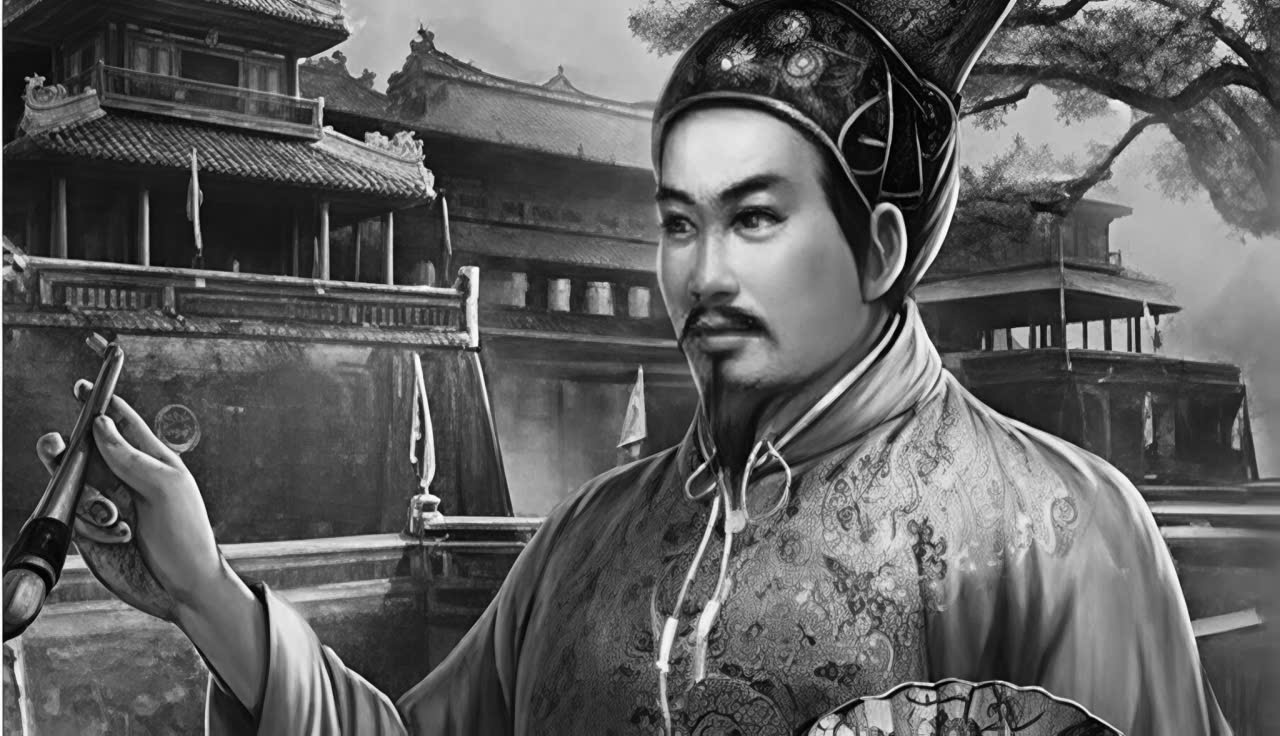
Dedicating his youth to battlefields for nearly 25 years (1775–1801), Gia Long finally unified the country and took the throne in 1802. Gia Long established the capital in Hue and laid the foundation for a centralized imperial system. He ordered the construction of major structures, including the Imperial City of Hue, which became the political and cultural center of the dynasty.
His reign marked the beginning of a long period of relative stability and territorial unity. Gia Long is remembered as a strong but pragmatic ruler who shaped the early identity of modern Vietnam.
Gia Long Royal Tomb History
The tomb began construction in 1814 and was completed in 1820. On May 11, 1814, Emperor Gia Long ordered the building of Tho Lang at Tho Son Mountain in Dinh Mon village to bury his principal wife, Empress Thua Thien Cao, who had passed away nearly three months earlier.
Before that, he had visited the area twice- first in 1808 when restoring the tombs of the Nguyen Lords, and again in 1811 when searching for a burial place for his mother, with the help of the famous geomancer Le Duy Thanh.
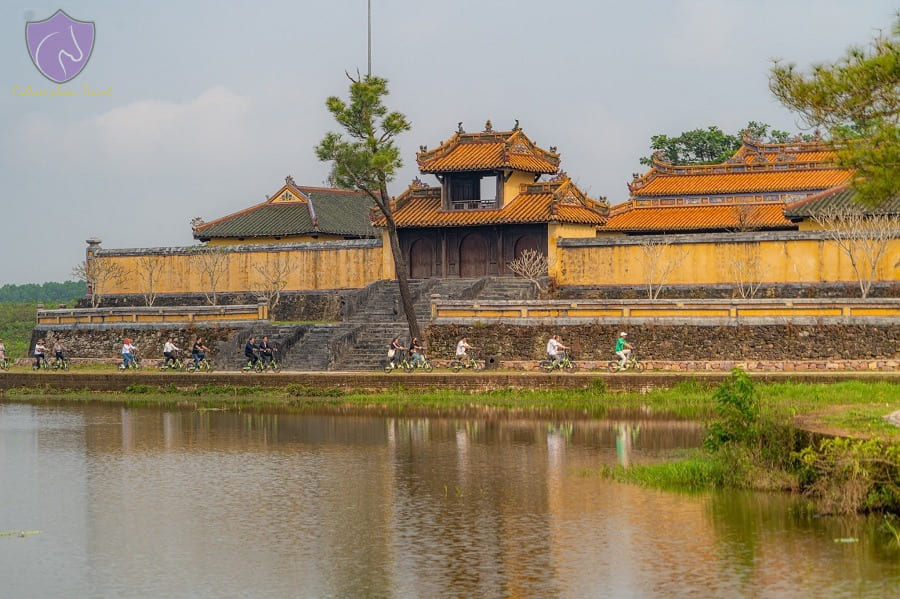
After many considerations and geomantic rituals, Tho Son Mountain was chosen as a “perfect land” with good spiritual energy, and the emperor personally approved the site. He also decided that both he and the empress would be buried in the same tomb, carefully selecting the burial locations himself.
Throughout six years of construction, Gia Long directly supervised the planning and building process, showing great care and dedication, even after surviving a serious accident at the construction site.
Unfortunately, this royal tomb suffered serious damage from the wars in Vietnam. Thankfully, some of its architectural components remained, which gave us concepts of the tomb’s core values. Therefore, the mausoleum went under renovation to rehabilitate major components of the complex.
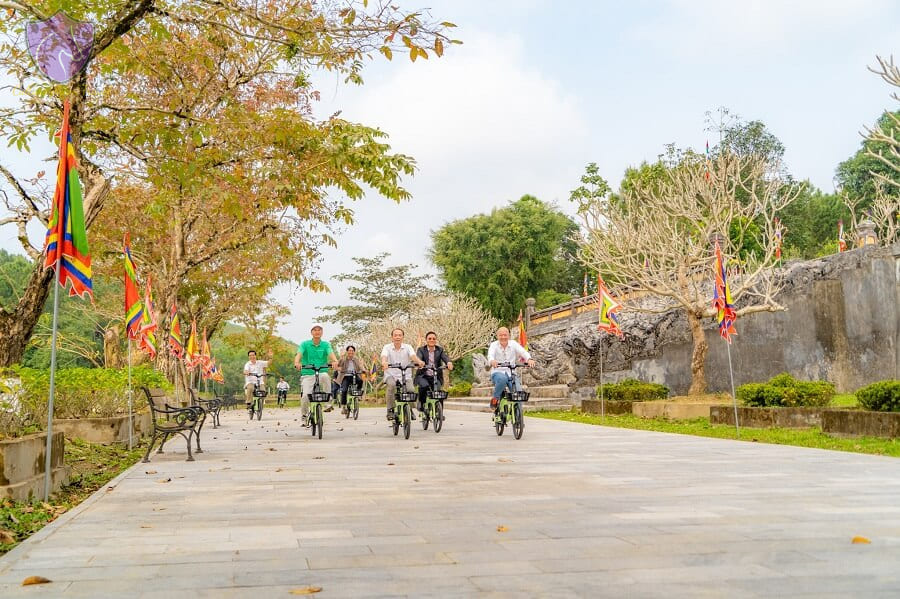
So far, it has been open to visitors. Interestingly, a green tour to Gia Long Tomb has been launched for visitors since 2024. It allows visitors to rent a bike and experience the tomb in the most environmentally friendly way. You can contact the hotline at 0326220022 to ask for information.
Tomb Of Gia Long’s Architecture
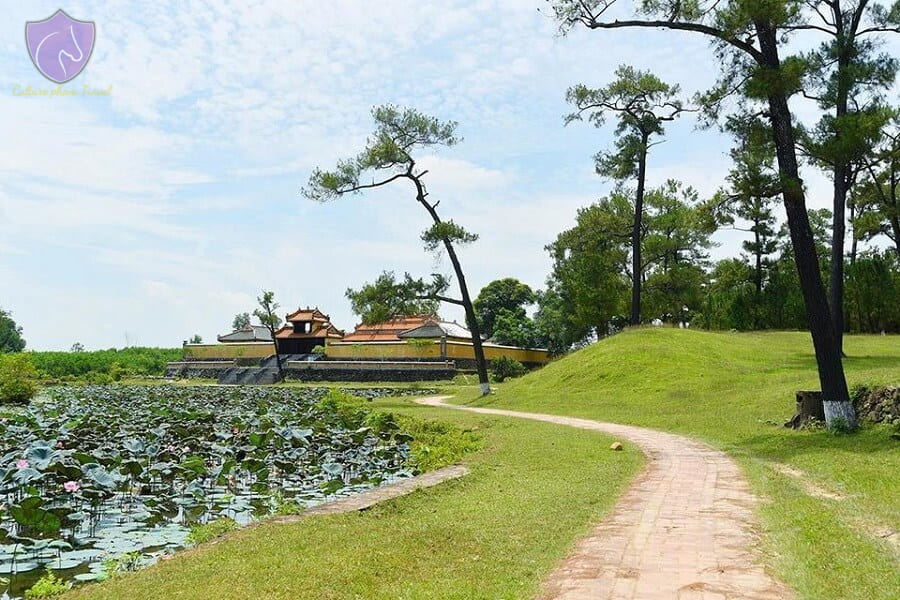
Gia Long Tomb is set on a large, flat hill, with Dai Thien Tho Mountain standing in front and seven mountains forming a protective backdrop behind.
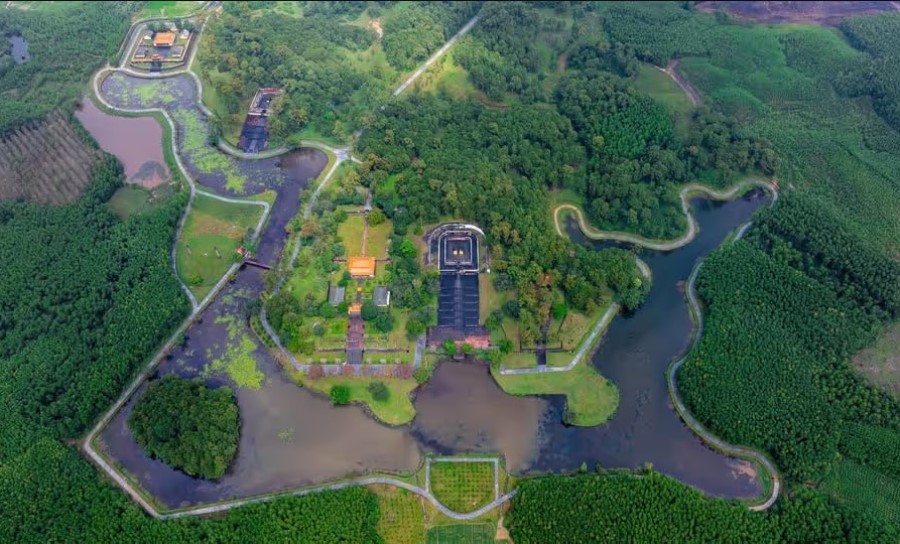
On both sides, fourteen mountains create a natural balance known as “Ta Thanh Long” (left) and “Huu Bach Ho” (right), and the whole complex is divided into three main areas.
Burial Area For Emperor And Empress
Among royal tombs in Hue, the burial area of the Gia Long Mausoleum is the most special for its double grave. To show appreciation for the wife accompanying him through every hardship, the Gia Long Emperor and the Thua Thien Empress were buried in the same place. Above all, it symbolizes happiness and loyalty.
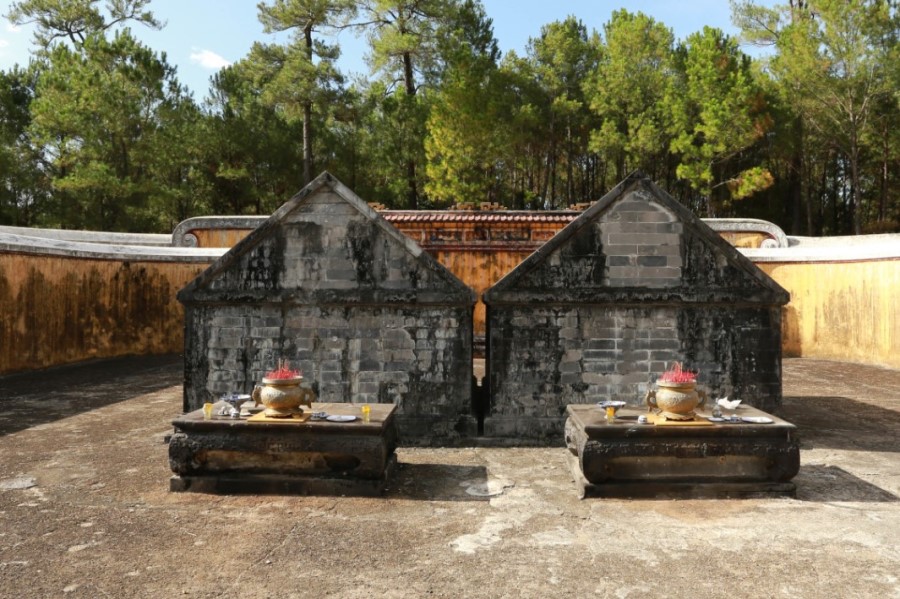
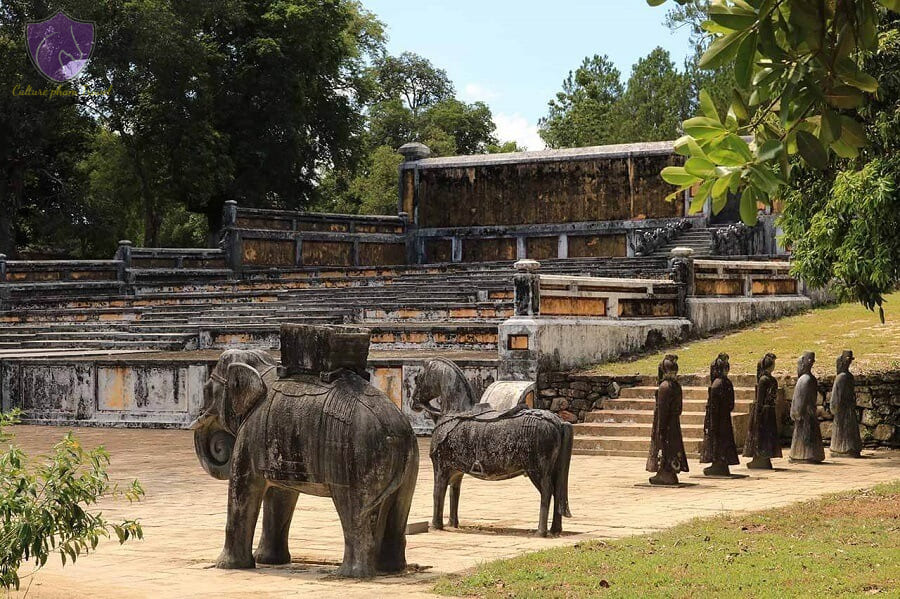
To reach this holy grave area, visitors will pass by two parts: the courtyard and bửu thành, the wall system enfolding it. Firstly, you will enter the royal courtyard, with some imposing stone sculptures of horses, elephants, and civil and military servants.
Next, a 7-level staircase appears, and after walking up to the 7 Honor Courtyard steps, you will see the burial site on the peak of the mountain. Additionally, it is protected by the Buu Thanh wall system and has a locked door that opens only on special occasions.
Minh Thanh Shrine
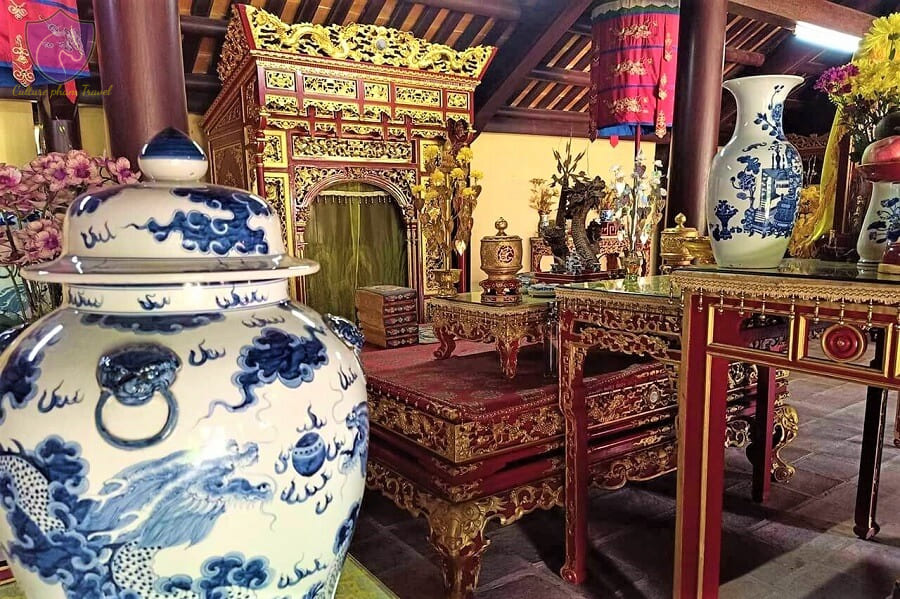
On the left of the burial area is the Minh Thanh Shrine, the worship place of the Gia Long Emperor and Thua Thien Empress. The shrine functions as a place to put their altars and important memorabilia. Despite worn-out details with time, it offers visitors a fresh environment of green trees, open air, and a neatly arranged layout.
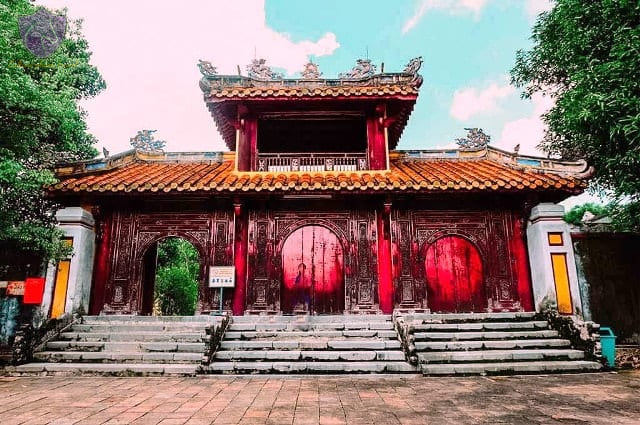
Similar to the burial site, the Minh Thanh Shrine has a simple but solid construction rather than flashy decorations like other royal tombs. In the past, Minh Thanh Shrine worshiped many memorabilia associated with King Gia Long’s life of war, such as hats, belts, and saddles. Moreover, you can visit this solemn temple with respect and make some prayers in front of its altars.
Bi Dinh Pavilion – Merit Records
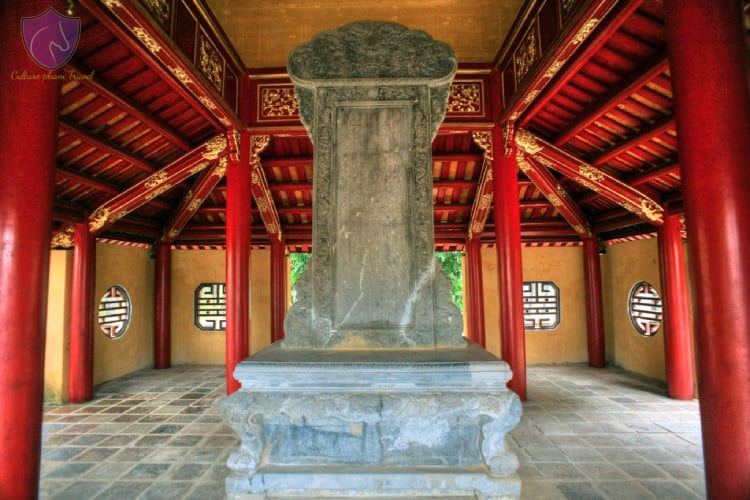
On the left of the tomb is Bi Dinh, the records of the significant merits of the Gia Long Emperor. Almost every royal tomb of the Nguyen Emperors has such a merit record site like this. Its setting features mature pine trees, creating a peaceful and relaxing space.
You will see a large stele, namely Minh Đức Thần Công, which shows the appraisal inscription of Minh Mang Emperor for Gia Long’s (his father’s) life and accomplishments. Interestingly, it was carved so elaborately and exquisitely that the characters on it are still clear after nearly 200 years.
Burial Areas For Royal Family Members
Besides the main three parts, the Gia Long Royal Mausoleum accommodates burial areas for his family members. Plenty of Nguyen Dynasty royal family members, such as Gia Long’s mother (known as Thoai Thanh Tomb) and elder sister (Hoang Co Tomb), were buried here. Surprisingly, these burial sites made the Gia Long mausoleum’s perimeter rise to roughly 11,234 meters.
Travel Tips for Visitors
✓ When visiting Gia Long Tomb or other religious sites, it’s important to follow a respectful dress code. You should wear modest, non-revealing clothing to show respect for the cultural and spiritual atmosphere.
✓ Since you will walk quite a bit around the complex, choose light and comfortable outfits. A T-shirt, knee-length pants, and a good pair of sneakers are ideal for exploring the area with ease.
✓ As the tomb is mostly outdoors, don’t forget to protect yourself from the sun. Bringing sunscreen, a hat, sunglasses, or a light long-sleeved jacket will make your visit more comfortable.
✓ For better convenience, consider buying combo tickets or joining a guided tour. Combo tickets can help you save money, while tours often include transportation and knowledgeable guides to enrich your experience.
✓ You can also check more details about the Hue entrance fee and nearby attractions, especially other royal tombs in Hue, to plan a more complete and enjoyable trip.
Conclusion
Despite its more remote location than other royal tombs in Hue City, Gia Long Tomb shines with its own features. The tomb shows breathtaking beauty thanks to endless mountain ranges, pine forests, and paths among green grass and wonderful wildflowers. If you’re looking for a less-crowded tourist attraction, the Gia Long Emperor Tomb will satisfy you with its ideal serenity.
Pingback: TOP HUE ROYAL TOMBS YOU MUST VISIT - Culture Pham Travel
Pingback: Minh Mang Tomb in Hue - Culture Pham Travel
Pingback: HUE Entrance Fee Monuments in 2022 - Culture Pham Travel